

Domestic vs. Overseas Packaging Manufacturing: Why Working With a U.S. Manufacturer Matters
The Short Answer: Working with a domestic manufacturer means shorter shipping distances, faster communication, tighter quality oversight, and a steadier supply chain than overseas production usually offers. Overseas can win on unit price, but a U.S. manufacturer often wins on total cost, speed, and fewer surprises.
Sourcing packaging overseas can look cheaper on the quote. The trouble is that the quote is not the whole story. Long lead times, shipping delays, minimum order sizes, quality misses, and time-zone gaps all add cost that never shows up in the per-unit price. For many brands, those hidden costs outweigh the savings.
Unit Price vs. Total Cost
The choice between a domestic manufacturer and an overseas supplier usually comes down to one misread number: the unit price.
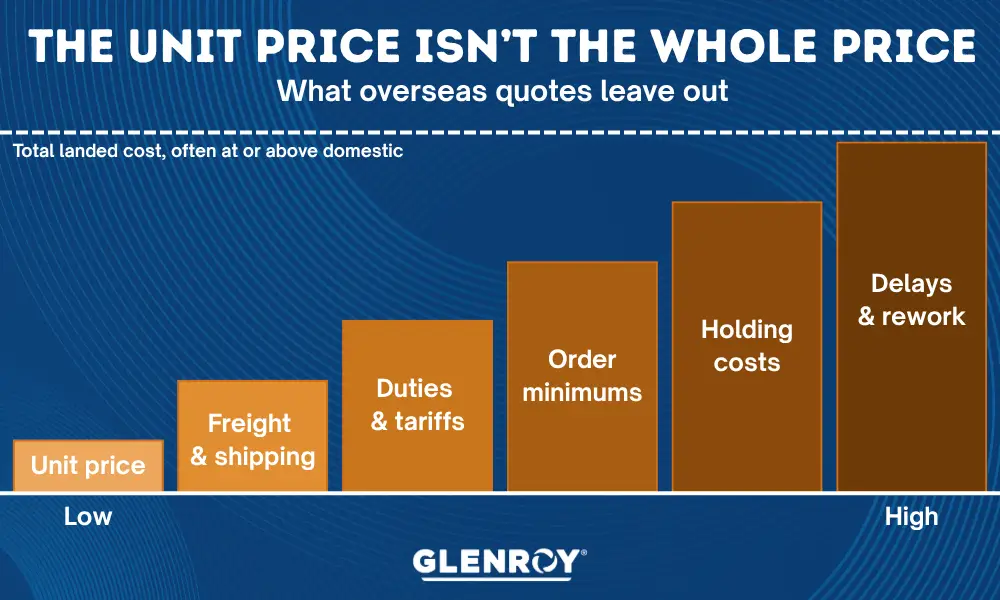
Overseas quotes often list a lower price per unit. That number is real, but it ignores what it takes to get finished goods from a factory halfway around the world onto your line and out the door. Total cost of ownership adds in the parts the sticker price leaves out:
- Freight, duties, and tariffs often raise the landed cost well above the quoted unit price, and in a volatile trade environment final cost might not be determined until arrival date.
- Large minimum order quantities tie up cash in inventory you may not need yet.
- Delays, reworks, and quality issues cost money that never appears on the original quote.
When you add those up, the gap between overseas and domestic production narrows fast, and often flips.
Where a U.S. Manufacturer Pulls Ahead
Most of the advantages American manufacturers offer come down to distance, oversight, and control. Keeping manufacturing operations inside the United States changes how a project runs day to day.
Shorter, More Predictable Lead Times
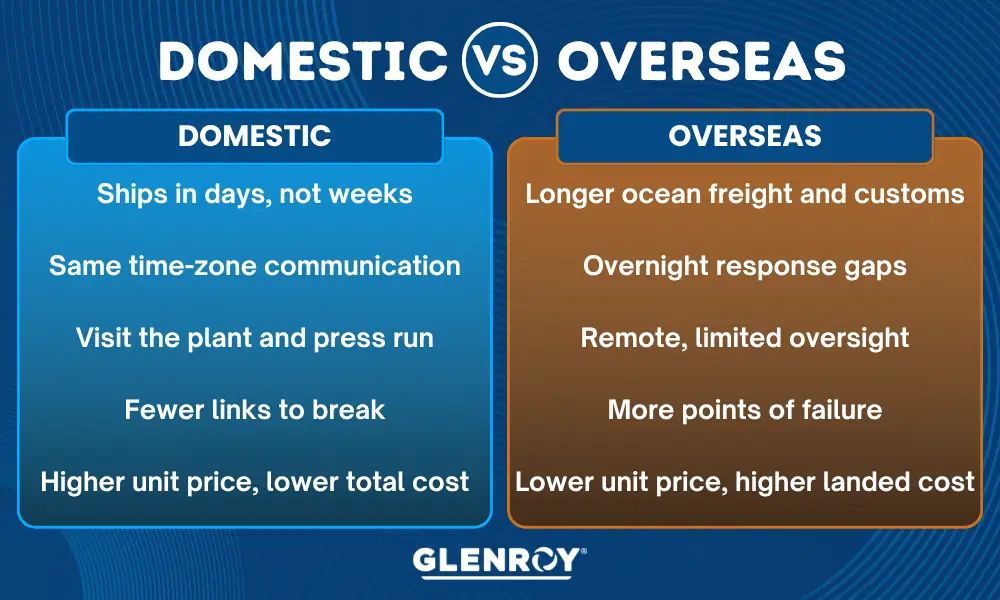
Distance drives time. A domestic manufacturing facility ships quickly and reliably and skips the ocean freight, customs holds, and port backups that stretch overseas timelines. That speed matters most when demand shifts, a product launches, or a reorder has to hit a retail date. Shorter lead times also let you carry less safety stock, which frees up cash and warehouse space.
Easier Communication and Oversight
Working in the same country, and often the same time zone, removes friction. Questions get answered the same day instead of overnight. You can visit the plant, watch a press run, and approve a proof in person. When urgent issues arise, domestic customer service can act on it quickly rather than waiting for a time-zone gap to close.
Supply Chain Resilience
Recent years have shown how fragile long supply chains can be. A domestic supply chain has fewer links that can break, which makes supply chain resilience easier to plan around. Keeping domestic sources in the mix protects you from port strikes, shipping bottlenecks, and sudden tariff changes. For products tied to national security or public health, domestic manufacturing capacity is more than a convenience; it is a safeguard.
Quality Control and IP Protection
Closer oversight makes quality easier to maintain. U.S. manufacturers run consistent manufacturing processes under steady regulatory standards, and you can audit a manufacturing facility without booking an international flight. Domestic production also keeps your artwork, formulations, and designs under stronger legal protection than some overseas arrangements offer.
Where Overseas Still Makes Sense
Overseas manufacturing earns its place in the global marketplace, and pretending otherwise would not be honest. Domestic production sometimes carries higher costs per unit, and overseas can be the right call in a few situations:
- Very high volumes can make the lower unit price worth the longer timeline and larger order minimums.
- Products with no domestic supplier for a specialized material or process may have to source abroad.
- Brands with mature, stable demand and long planning horizons can absorb the lead times more easily.
The goal is to price the whole picture rather than the per-unit line alone before you commit.
The Reshoring Shift
More American companies are moving production home, and the numbers back it up. The Reshoring Initiative reported that 244,000 U.S. manufacturing jobs were announced in 2024 through reshoring and foreign direct investment, with proximity to customers and a skilled workforce among the top reasons cited. Groups like the National Association of Manufacturers track the same trend across the wider manufacturing sector.
The momentum is easy to explain:
- Shorter supply chains lower risk and speed up response times.
- Reshoring supports American workers and jobs, which strengthens domestic industry as a whole.
- Tax credits and other incentives have made building or expanding a U.S. manufacturing facility more affordable.
In a connected global economy, buying from domestic sources is both a practical sourcing decision and a competitive advantage for many American businesses, and it resonates with customers who value American-made goods.
How to Choose Between Domestic and Overseas
The right choice depends on your product and your priorities. These questions point you in the right direction:
- How fast do you need finished goods, and how often will demand shift?
- What order volumes are you running, and can you absorb large minimums?
- How tight are your quality and compliance requirements?
- How much does supply chain resilience matter for your category?
- What is the total landed cost, including freight, duties, and rework risk, rather than the quoted unit price alone?
A small business placing its first order and a national brand running millions of units both benefit here. Most companies that value speed, oversight, and a steady supply chain find that a domestic manufacturer comes out ahead.
Getting Packaging Made Closer to Home
Domestic and overseas manufacturing both have a place, but the decision should rest on total cost, speed, and risk rather than the unit price alone. For brands that need finished goods quickly, want hands-on quality oversight, and count on a steady supply chain, a domestic manufacturer usually delivers more predictable outcomes.
Glenroy is a U.S.-based flexible packaging manufacturer that has helped brands for decades with in-house engineering support, award-winning printing, and responsive service that keeps projects on schedule. If you are comparing sourcing options, contact our team to talk through how domestic production fits your product, or explore our flexible packaging films and stand-up pouch options.