
TruRenu® Post-Consumer Recycled (PCR) Film Laminations
Sustainable Flexible Packaging Made with Post-Consumer Recycled (PCR) Content.
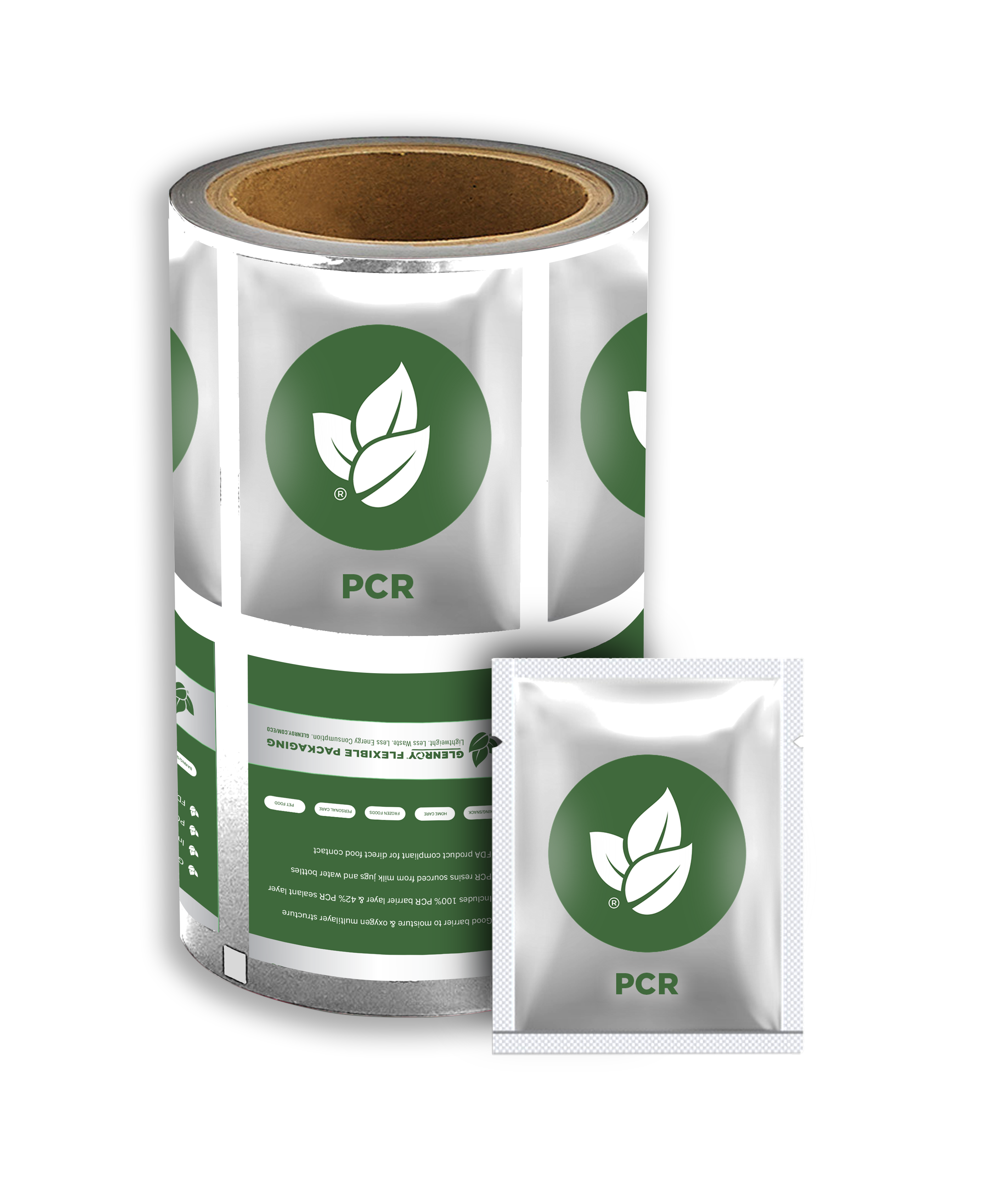
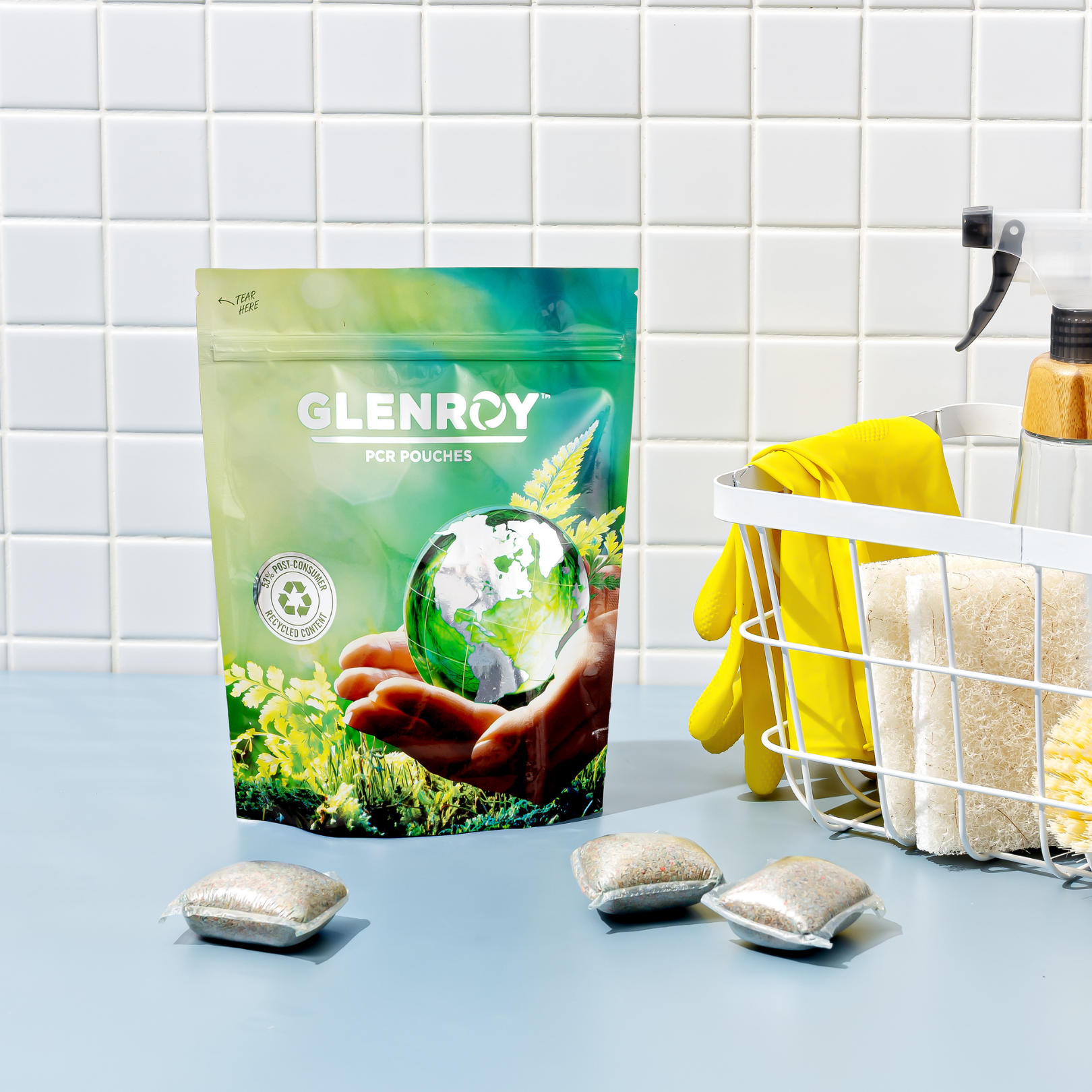
Glenroy’s TruRenu® PCR film laminations are custom-printed laminations made with post-consumer resin sourced from recycled plastic bottles and milk jugs, helping brands reduce their carbon footprint and meet sustainability goals.
Why Choose Post-Consumer Recycled Packaging
As brands face growing pressure to reduce plastic waste and environmental impact, post-consumer recycled packaging offers a practical path toward a more sustainable supply chain. PCR packaging diverts post-consumer waste from landfill waste and puts recycled material back into new products, reducing dependence on fossil fuels and lowering greenhouse gas emissions throughout the manufacturing process.
Glenroy’s TruRenu® PCR film laminations allow brands to incorporate recycled plastic into their flexible packaging without sacrificing performance, safety standards, or shelf appeal. For brand owners looking to meet minimum content requirements or advance sustainability goals, PCR packaging is one of the most impactful steps available.
TruRenu® PCR Film Lamination Features
Made with 44% post-consumer resin, the metalized PCR film laminations in the TruRenu® portfolio deliver sustainable packaging with proven performance. PCR resin is sourced from plastic beverage containers, milk jugs, and water bottles collected through municipal recycling programs, then processed through a rigorous recycling process to meet safety standards for direct food contact.
Key features include:
- Good barrier to moisture and oxygen in a multilayer structure
- Safe and certified for direct food contact
- PCR material sourced from recycled plastic containers in the domestic recycling stream
- Stick pack roll stock available
- Ideal for pharmaceutical, nutraceutical, food and beverage, and cosmetic & personal care applications
PCR Packaging and the Circular Economy
According to Creating a Circular Economy for Plastics by Nicola Ledsham, “Society needs to stop thinking of plastic as ‘waste,’ but as a renewable resource that needs to be disposed of correctly.” Finding ways to use recycled plastic and post-consumer waste in new products, like post-consumer recycled film laminations, helps drive a restorative circular economy while reducing landfill waste and carbon emissions. Contact us to discuss how TruRenu® PCR film laminations can help you achieve your sustainability goals.

PCR Packaging vs. Traditional Plastic Packaging
Traditional plastic packaging relies entirely on virgin raw material derived from fossil fuels. Post-consumer recycled packaging reduces this dependence by incorporating recycled material sourced from beverage containers, plastic bottles, and plastic containers already in the recycling stream. The result is measurable waste reduction, lower carbon footprint, and reduced greenhouse gas emissions across the supply chain.
Unlike compostable packaging or other alternatives that may require specialized infrastructure, PCR packaging works within existing municipal recycling programs and manufacturing processes, making it one of the most scalable sustainable packaging options for brands today.
Glenroy’s Commitment to Sustainable Packaging
Glenroy invests in sustainable packaging solutions that help brands reduce environmental impact without compromising product protection. Our TruRenu® portfolio reflects a commitment to advancing recyclable packaging and PCR material options that support a circular economy. As a U.S.-based manufacturer, we maintain full control over quality and supply chain efficiency while helping brands meet evolving sustainability goals.
Frequently Asked Questions
What is post-consumer recycled packaging?
Post-consumer recycled packaging is made with PCR resin derived from post-consumer waste such as plastic bottles, beverage containers, and milk jugs collected through municipal recycling programs. The recycled plastic is processed into PCR material that can be used as a raw material in new packaging products.
Is PCR packaging safe for food contact?
Yes. Glenroy’s TruRenu® PCR film laminations are certified safe for direct food contact and meet applicable safety standards for food, beverage, and nutraceutical applications.
How does PCR packaging support a circular economy?
PCR packaging keeps recycled material in use by transforming post-consumer plastic into new products rather than sending it to a landfill. This reduces dependence on fossil fuels, lowers carbon emissions and energy consumption, and supports ongoing waste reduction.
What industries can use Glenroy's PCR film laminations?
TruRenu® PCR laminations serve a wide range of markets, including food and beverage, nutraceutical, pharmaceutical, cosmetic, and personal care. Contact us to explore PCR packaging options for your specific application.