
How Private Label Packaging Works
The Short Answer: Private label packaging is the packaging behind products a retailer sells under its own brand rather than a national brand’s. A manufacturer makes the product and the packaging; the retailer puts its own label on it, and the result is a store brand that competes on the same shelf as the name brands, usually at a lower price.
If you have ever bought a store brand from the grocery shelf, you have bought a private-label product. The product inside often comes from the same kind of facility as the national brand next to it. What changes is the label, the packaging design, and the price.
What Private Label Actually Means
Private labeling is an arrangement, not a product type. A retailer or business owner contracts a manufacturer to make a product, then sells it under the retailer’s own brand. The retailer owns the brand, the manufacturer owns the production, and depending on the deal, may also handle formulation, sourcing, packaging, and labeling, which is what people mean by a turnkey solution.
A national brand develops, makes, markets, and sells its own product under its own name. With private label, those roles are split between the retailer who owns the brand and the private label manufacturers who produce it.
Store brands have grown from cheap alternatives into real competitors. Many private label products now match or beat national brands on quality, and both business owners and consumers have noticed.
Why Retailers and Brands Choose Private Label
The appeal comes down to control and margin.
- Better margins: Without a national brand’s marketing overhead built into the wholesale price, a store brand can sell at a lower price and still earn more per unit.
- Brand ownership: The retailer builds its own brand equity instead of reselling someone else’s.
- Differentiation: A private label product a shopper cannot buy elsewhere gives a retailer something unique.
- Speed to shelf: Working with an established contract manufacturer is faster than building production in-house, improving operational efficiency and shortening the path for a new product.
For a small business or new brand, private label is a lower-risk launch. Private-label brands can put a product line on the shelf without building a factory or running product development in-house.
The Private Label Supply Chain
A private label product passes through several hands before it reaches a shopper. Understanding the chain shows where packaging fits.
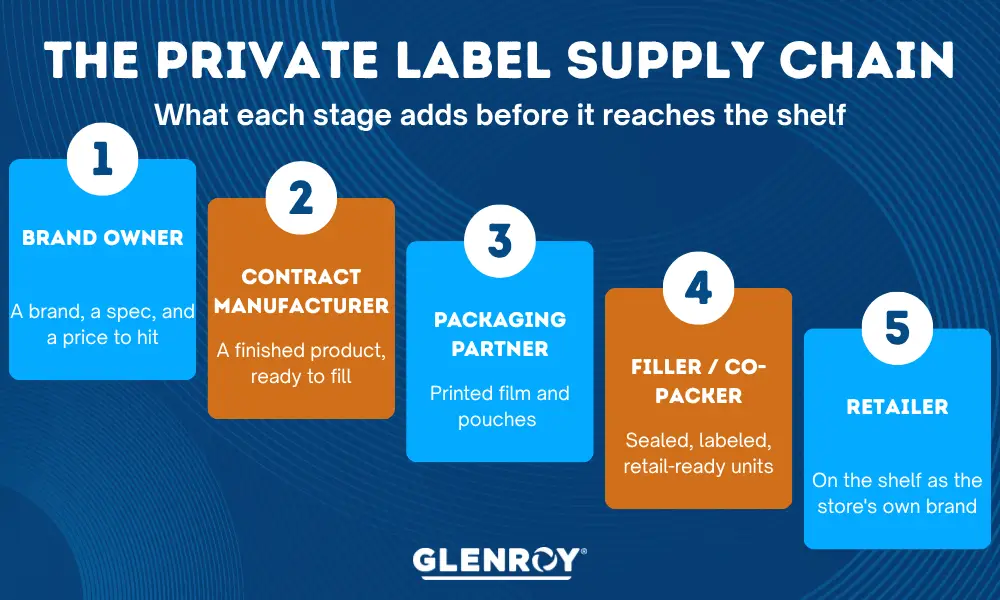
- The retailer or brand owner defines the product, the target price, and the brand.
- The contract manufacturer formulates and produces the product, such as a dry blend supplement, a beverage product, or a pet food.
- The packaging partner supplies the film, pouch, or container the product goes into.
- The filler or co-packer puts the product into the package and applies the label.
- The retailer stocks it and sells it under its own brand.
These roles sometimes combine. A full turnkey solution bundles formulation, filling, and packaging under one contract. In other cases, a business owner assembles the pieces, choosing one manufacturer for the product and a separate partner for custom packaging.
Either way, packaging is not an afterthought. It protects the product and carries the brand, so it belongs in the plan early.
Packaging Is Where a Store Brand Wins or Loses
Here is the part brands underestimate: the product might be excellent, but the shopper meets the packaging first. Packaging does three jobs at once.
It Protects the Product
Packaging keeps the product fresh, stable, and safe through the supply chain. A supplement powder needs a moisture barrier; a snack needs to stay sealed. Get this wrong, and the product fails on the shelf, damaging the brand the retailer just built.
It Carries the Brand
The label, the print quality, and the packaging design are the brand. For a store brand trying to look as good as the national brand beside it, presentation is the whole pitch. Sharp graphics and a clean custom label signal quality before the shopper reads a word.
It Fits the Product and the Channel
Different products want different packaging. A dry blend or protein product often ships in a stand-up pouch, single-serve supplements go in stick packs, and a beverage product needs its own format. Matching the package to the product type is the first packaging decision.
Flexible Packaging and Private Label
Flexible packaging suits private label especially well:
- Lower cost to start: Flexible plastic packaging generally carries lower tooling costs than rigid options, which matters for a small batch or a first run.
- Custom design without heavy investment: Printing lets a store brand get a custom design and label design without the expense of custom molds.
- Shelf presence: A well-printed stand-up pouch competes visually with any national brand product.
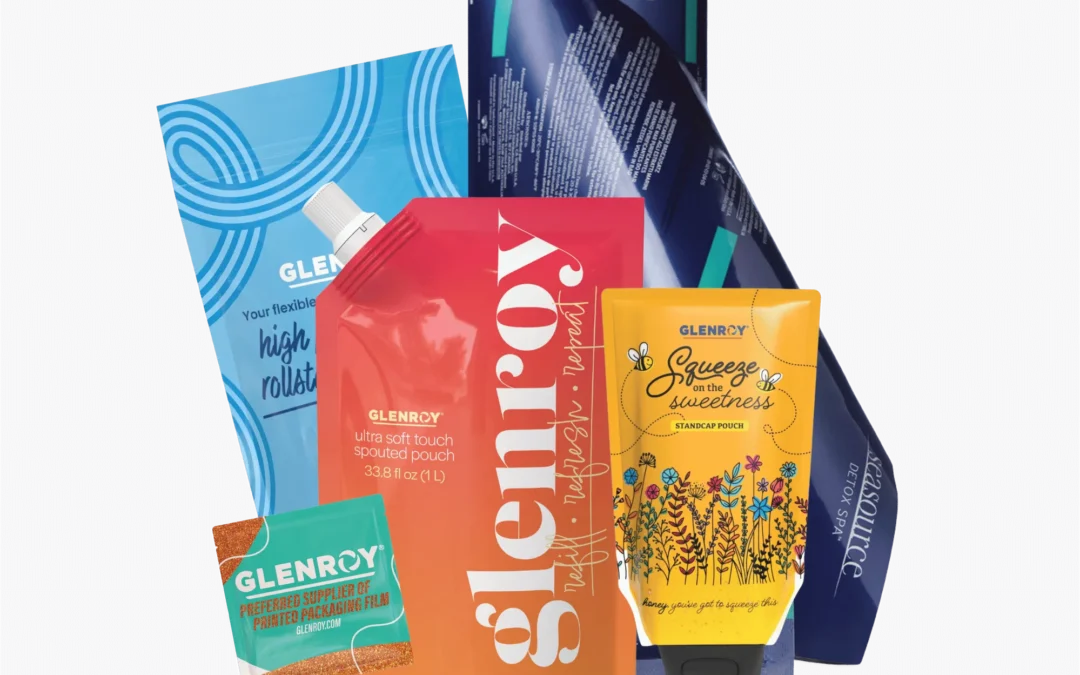
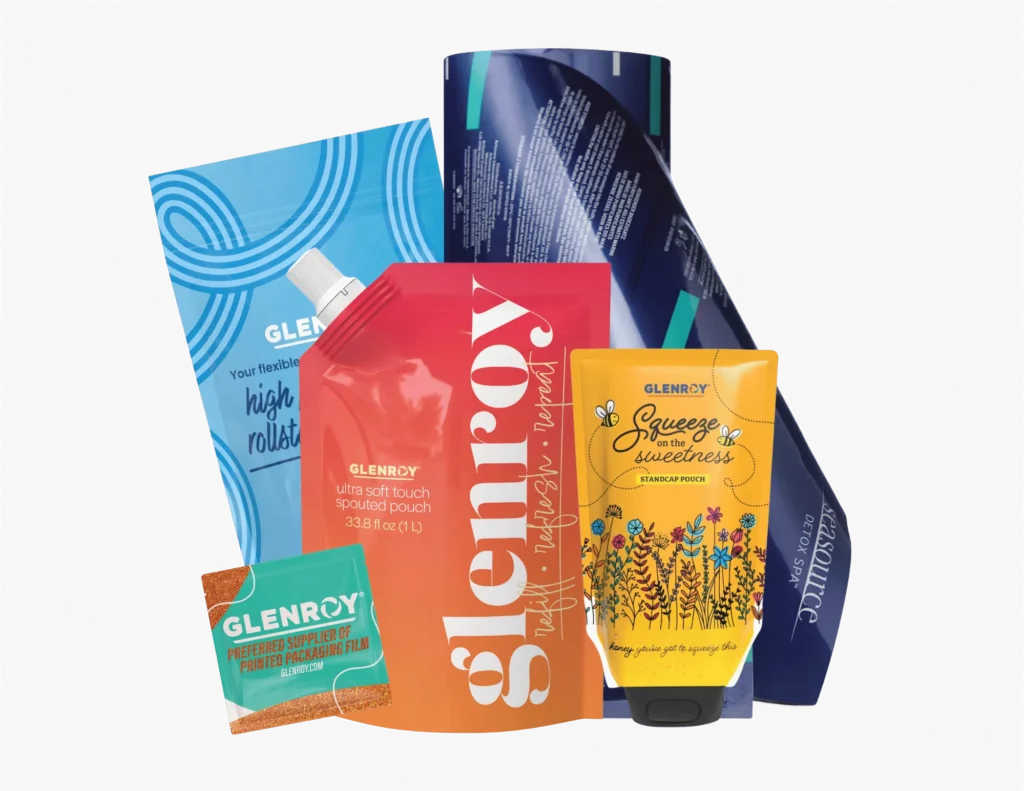
- A broad range of formats: Pouches, stick packs, sachets, and rollstock cover most private label product types, from supplements to pet food to snacks.
For a retailer building an own brand across a product line, flexible packaging is a consistent, affordable way to package many products under one look.
What to Plan For Before You Start
A private label packaging project runs smoother when you settle a few things up front:
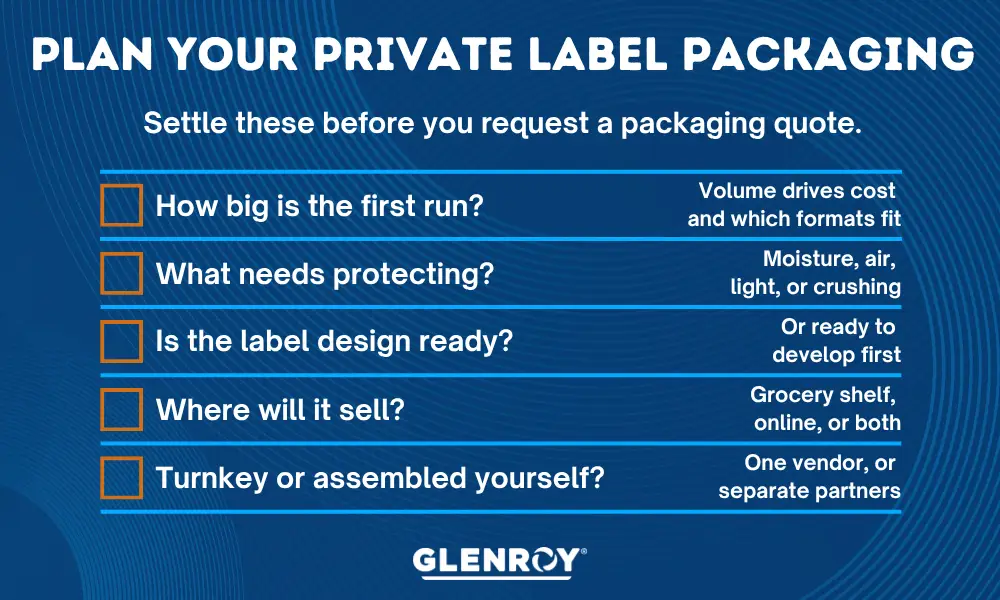
- Volume: Your run size drives cost and which formats make sense. A small business testing a new product plans differently than a national rollout.
- Product type and protection: What does the product need the package to do? A shelf-stable dry blend and a moisture-sensitive supplement have different needs.
- Branding: Your label design and packaging design should be ready, or ready to develop, so the package reflects the brand from the first run.
- The channel: Where the product sells, from a grocery retailer to direct online, shapes the format and the presentation.
- Your partners: Decide whether you want a single turnkey solution or to assemble a contract manufacturer and a packaging partner separately.
Answer these, and the packaging solutions that fit usually become clear quickly.
Private Label Has Moved Beyond Lower Cost
The old view of private label was lower-cost alternatives to name brands. That view is out of date.
Today, many store brands compete on quality and design, not only price. Premium packaging, high-quality print, and thoughtful design let a private label brand sit alongside national brands rather than below them. For a business owner, good packaging is how a store brand earns a premium position instead of settling for the bottom shelf.
Sustainability in Private Label
Retailers face the same sustainability expectations as national brands, and private label is a place to act on them directly. Measurable choices matter more than claims:
- Recyclable-ready structures that fit a real collection stream
- PCR content where the product and format allow it
- Downgauging to use less material without giving up protection
- Lighter weight than rigid alternatives, which cuts shipping across the supply chain
A retailer can make sustainability part of the brand story, as long as the choices are real.
Getting Private Label Packaging Right

Private label works when the product, the packaging, and the brand line up. The retailer owns the brand, a contract manufacturer makes the product, and a packaging partner supplies the package that protects it and carries the label. Plan the packaging early, match it to the product type and channel, and treat presentation as part of performance.
Since 1965, Glenroy has manufactured custom flexible packaging films for brands and private label products across supplements, pet food, snacks, and more. We build stand-up pouches, stick packs, and other formats with the print quality a store brand needs to compete, all made in the United States.
Tell us about your product and your brand. Contact us, and we will help you build packaging that protects the product and earns its place on the shelf.