

Types of Stand-Up Pouches: Which One Fits Your Product?
The Short Answer: Stand-up pouches come in a few main types, including standard rounded-bottom gusset pouches, flat bottom pouches, spouted pouches, and inverted pouches, plus add-on features like resealable zippers and spouts. The right one depends on your product, how it fills, and how long it needs to stay fresh on store shelves.
Stand-up pouches have taken over aisles that rigid packaging used to own, and for good reason. They hold their shape on the retail shelf, use less material, and give brands room for eye-catching print. The catch is that not every pouch works for every product. A protein powder, a liquid detergent, and a bag of pet treats each require something different from their packaging. Picking the wrong format can cost you shelf life, machine time, and money.
What Makes a Pouch Stand Up
Every stand-up pouch shares one design feature: a bottom gusset. This is a folded panel at the base that opens out when the pouch is filled, creating a flat footing so the package stands on its own. The gusset is what separates a stand-up pouch from a flat pouch or a pillow pouch that lies down or slumps over.
From there, the differences come down to shape, seals, and added features. Those choices affect three things brands care about:
- The barrier properties of the film determine how well the pouch protects the product inside.
- The pouch has to run cleanly on a filling line during the packaging process.
- The pouch needs to stand out on the shelf and work well in the customer’s hands.
The Main Types of Stand-Up Pouches
Most stand-up formats fall into a handful of shapes. Here is what each one does best.
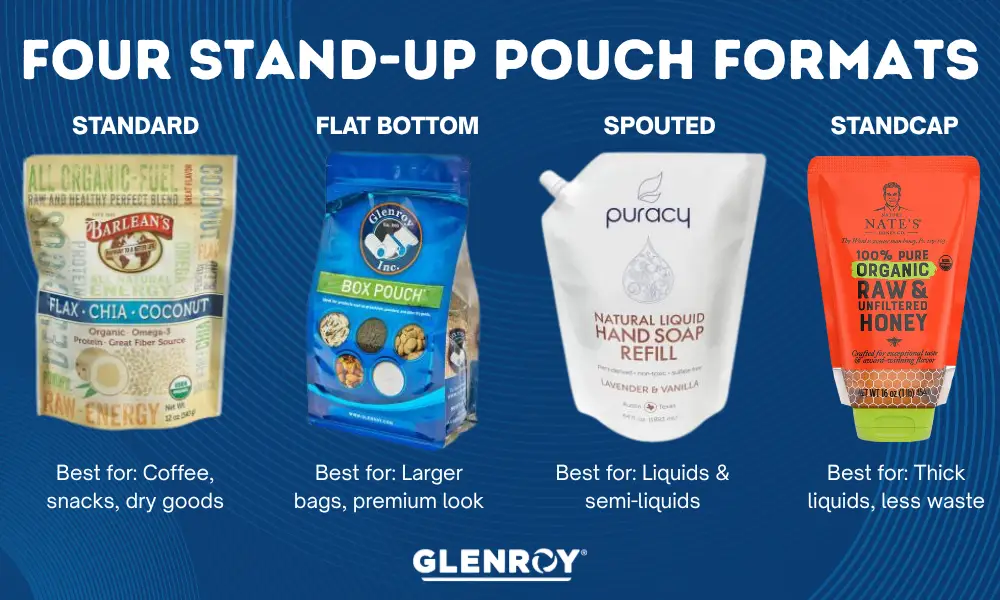
Standard Stand-Up Pouch (Bottom Gusset)
This is the classic stand-up pouch and the format most people picture first. It uses a rounded bottom gusset with sealed sides, which gives it a slightly curved base. It is the most common and usually the most affordable format, which makes it a safe starting point for many food packaging projects. It suits a range of everyday products:
- Coffee, granola, and snack products fill and seal cleanly in this format.
- Smaller bags of pet food and pet treats hold their shape well.
- Lightweight products that do not need a wide base run without trouble.
Flat Bottom Pouch (Box Pouch)
Flat bottom pouches have a flat bottom panel and often two side gusset panels. That structure gives them a boxy shape with up to five printable sides and a base wide enough to hold heavier fills. The tradeoff is cost, since flat bottom pouches use more material and a more involved packaging process than standard pouches. They make sense in a few situations:
- Larger bags of coffee, protein powder, and pet food need the sturdy base these pouches provide.
- Products that stack neatly and face forward on store shelves show well in this format.
- A premium look comes through with the extra room for custom printing.
Spouted Pouch
Spouted pouches add a plastic fitment and cap, which turns the pouch into a pour-and-reseal package for liquids and semi-liquids. The spout controls flow, cuts spills, and lets customers reclose the flexible pouch between uses. They handle several product types well:
- Baby food, applesauce, and drink pouches pour and reseal with less mess.
- Liquid soap, detergent, and other household products dispense in controlled amounts.
- Personal care items like shampoo, lotions, and gels stay clean at the opening.
Spouted pouches work best when the fill is pumpable, and the film has the barrier properties to hold up against moisture.
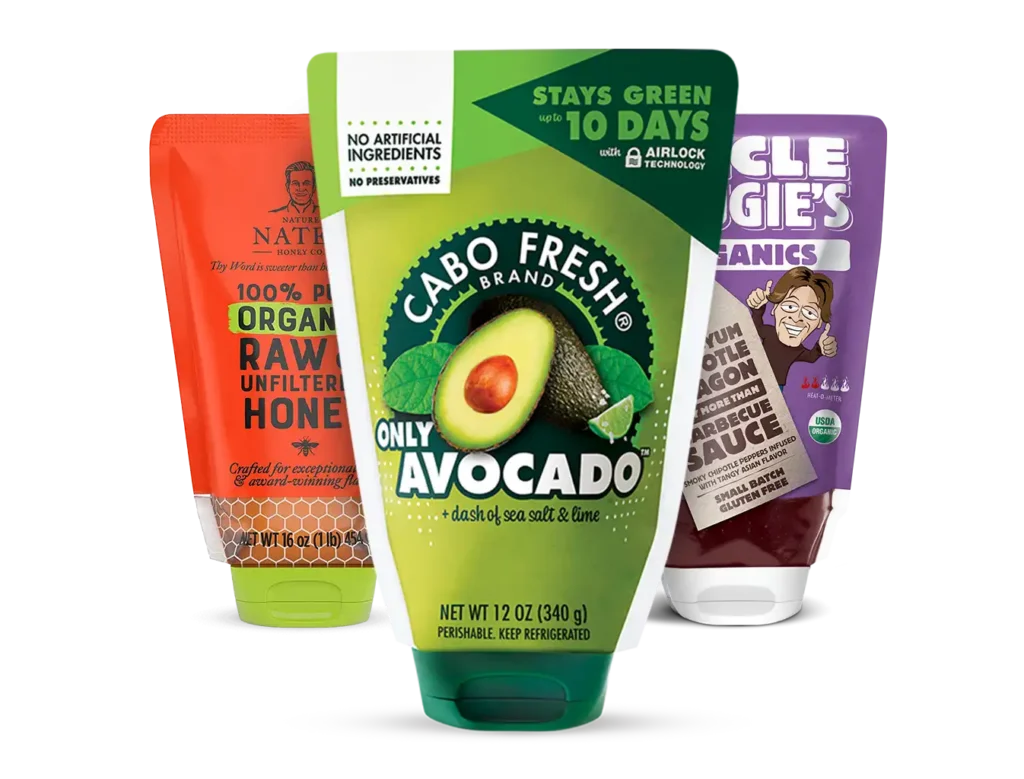
STANDCAP Inverted Pouch
An inverted pouch flips the spout to the bottom so the product settles near the cap. That design lets customers dispense thick liquids down to the last bit without shaking or squeezing hard. An inverted pouch works well in a few cases:
- Condiments, sauces, and syrups that are slow to pour dispense with less effort.
- Thick personal care and household products reach the cap so customers waste less.
Features That Change How a Pouch Performs
Beyond shape, a handful of additional features decide how a pouch works day to day. These are the most common.
Resealable Zippers and Sliders
A resealable zipper lets customers open and reclose the pouch, which protects freshness and extends shelf life after the first use. Slider closures do the same job with a track-and-tab design that is easier for some hands to operate. Both zipper closures and slider closures are common on resealable pouches, and they earn their added cost on anything used over several sittings, such as snacks, coffee, and pet treats.
Tear Notches
A tear notch is a small cut in the seal that gives customers a clean, easy place to open the pouch without scissors. It is a small detail that makes a real difference in how a food product feels to use. Laser-scoring provides a clean tear line across the entire package, eliminating frustrating consumer experiences with an uneven tear.
Custom Printing
Print does more than decorate; it is part of how a pouch performs on a crowded retail shelf. Brands print pouches with either flexographic printing, which is cost-effective for longer runs, or digital printing, which suits shorter runs and quick changes. Flexography still handles most of the work, at roughly 76% of flexible packaging print shipments versus about 1% for digital. Either way, print quality on the outer layer shapes how customers judge the product before they ever open it.
Stand-Up Pouch vs Flat Pouch vs Pillow Pouch
Not every flexible pouch stands up, and that is fine for the right product.
- A flat pouch is a simple three-side or four-side seal pouch that lies flat or uses a hanger hole, which fits single servings, samples, and thin, lightweight products.
- A pillow pouch is a sealed tube shaped like a pillow, common for chips and quick snacks, and it does not stand on its own.
- A stand-up pouch earns its place when shelf presence and reseal features matter.
Matching the format to how the product sells is the goal, not defaulting to the fanciest option on the sample wall.
How to Choose the Right Pouch for Your Product
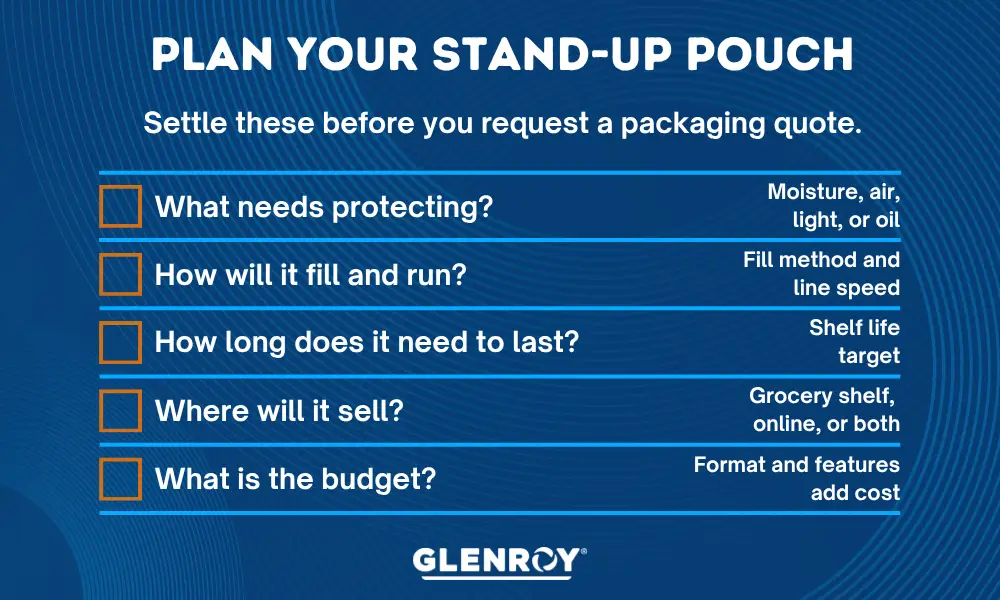
The right pouch comes from the product, not the other way around. These factors point you toward the best fit:
- Product chemistry comes first, because oily, moisture-sensitive, or oxygen-sensitive products need films with stronger barrier properties to hold shelf life. Choosing a film manufacturer with barrier expertise and technical support is crucial to success.
- Your fill method and line speed decide runnability, so the pouch has to move cleanly through your equipment during the packaging process.
- Shelf life targets often call for higher-barrier films and reseal features when freshness has to last.
- Shelf strategy tips toward a stand-up format when facing forward and standing tall drives sales.
- Budget rounds it out, since standard pouches cost less while spouts, zippers, and flat bottoms add cost in exchange for function.
Different products have unique needs, and the best flexible packaging solutions balance protection, runnability, and shelf appeal instead of chasing one at the expense of the others.
A Note on Sustainability
Stand-up pouches already use less material than most rigid packaging, which lowers the carbon footprint of shipping and storage. That is a big reason the packaging industry keeps moving toward flexible formats, a shift that groups like the Flexible Packaging Association follow closely. Sustainable packaging works best when the claims are specific and provable:
- Recyclable-ready structures made from a single material family, rather than a mix of different materials, can be collected through the store drop-off and return programs How2Recycle helps label.
- Post-consumer recycled content, known as PCR, puts recovered material back into the film.
- Downgauging uses thinner film without losing performance, which cuts waste at the source.
Collection reality matters here. Films are not accepted in most curbside bins, so recyclable pouches depend on drop-off and mail-back programs. About 92% of Americans live within 10 miles of a film collection site, according to Sustainable Packaging Coalition research.
Getting the Right Pouch for Your Product
Choosing among the different types of stand-up pouches comes down to a few honest questions: what does your product need to stay fresh, how will it run on the line, and how should it show up on the shelf? Standard pouches, flat bottom pouches, spouted pouches, and inverted pouches each solve a different problem, and features like resealable zippers and tear notches fine-tune the fit.
This is where a manufacturing partner earns its keep. Glenroy is a U.S.-based flexible packaging manufacturer that helps brands match structure, barrier, and print to real-world constraints, backed by engineering support, award-winning printing, and sustainable packaging options. If you are weighing pouch formats for a new product or a redesign, contact our team to talk through the stand-up pouch options that fit your product.