
How to Optimize Your Packaging Supply Chain for Maximum Efficiency and Reliability
The Short Answer: Optimizing your packaging supply chain comes down to picking the right packaging materials, building tight supplier partnerships, and using data to spot problems before they grow. Brands that get this right cut transportation costs, weather supply chain disruption better, and keep shelves stocked without compromising sustainability goals.
A well-run packaging supply chain is the difference between a smooth product launch and a string of late-night fire drills. When packaging is late, off-spec, or stuck at a distribution center, the rest of your business operations stall right along with it. The good news: most efficiency gains come from small, repeatable habits, not heroic last-minute saves. Better forecasting, smarter material choices, and tighter supplier relationships do most of the heavy lifting.
Why Your Packaging Supply Chain Plays Such a Big Role
Packaging touches every stage of the value chain, from raw materials sourcing to the moment a customer opens the box. A weak link anywhere along the way creates ripple effects across the entire supply chain.
Common pain points include:
- Stockouts that halt production at the manufacturing facility
- Damaged goods from poor product protection
- Surprise tariffs or freight surcharges
- Sustainability initiatives that quietly miss their targets
- Long lead times that lock up cash in storage space
Strong supply chain management turns product packaging from a recurring problem into a competitive advantage.

Map Your Entire Supply Chain Before You Optimize Anything
You cannot fix what you cannot see. Most supply chain disruptions start with blind spots: an unverified second-tier supplier, an unclear handoff between the converter and the co-packer, or a packaging design that ships well in summer but fails in winter humidity. The New York Fed’s Global Supply Chain Pressure Index is a good benchmark for tracking the level of stress in the global system at any given moment.
Start with a clear picture:
- List every raw material source, including resin grades, inks, and adhesives
- Note lead times at each step, not just the final delivery date
- Flag single-source dependencies that could trigger a stop
- Document temperature, humidity, and handling needs along the route
Once the map is on paper, gaps and risks become much easier to discuss with your team and your packaging company.
Balance Your Inventory Without Overstocking
Too little inventory and you run out. Too much, and you tie up storage space and cash. The right level moves with demand, season, and supplier reliability.
A few best practices:
- Set safety stock based on actual lead-time variability, not gut feel
- Use rolling 12-week forecasts that get revisited weekly
- Track on-hand inventory in days of supply, not just units
- Build buffer stock for items with long ocean freight or specialty materials
For brands working across many SKUs, consolidating to fewer film structures (where performance allows) can cut working capital while protecting product quality.
Cut Transportation Costs Without Cutting Corners
Freight is one of the most volatile line items in supply chain packaging. According to the U.S. Bureau of Transportation Statistics, the Freight Transportation Services Index rose 0.7% year over year as of March 2026, signaling freight volumes are climbing again after a softer 2023 and 2024. That means more pressure on lanes, capacity, and pricing.
Flexible packaging gives you a head start here because it weighs less and ships flat, but there is more you can do.
Ways to lower transportation costs:
- Switch from rigid to flexible packaging where the product allows, reducing freight volume and material use
- Palletize efficiently and standardize case counts
- Combine smaller shipments
- Use regional converters to shorten miles traveled
Lighter, smaller packaging also lowers your environmental impact, so cost savings and sustainability goals tend to go hand in hand.
Build Sustainability Into the Strategy, Not the Afterthought
Brands today are graded on environmental footprint by retailers, regulators, and consumers. Containers and packaging make up the largest portion of municipal solid waste generated in the United States, according to the U.S. Environmental Protection Agency, which means packaging decisions carry real weight in any sustainability conversation.
A workable approach:
- Specify recyclable-ready structures where store drop-off or curbside collection is realistic, per How2Recycle guidelines
- Use post-consumer recycled (PCR) content where regulations and food contact rules allow
- Downgauge films to use less material without losing barrier performance
- Reduce single-use packaging by consolidating components into one pouch with a zipper or spout
- Set measurable targets and track progress quarterly
The right packaging partner gives you data on PCR percentage, recyclability claims, and carbon footprint by structure. Groups like the Sustainable Packaging Coalition publish frameworks that help align internal claims with real-world collection and recovery.
For brands chasing a circular economy model, sustainable packaging solutions like recycle-ready laminations let you move forward without trading away barrier performance or seal integrity.
Run a Smarter Operation Day-to-Day
Two areas pay back quickly once you start tightening them: the tech stack you use to manage packaging and the way you handle product variation across SKUs.
Use Technology to Cut Surprises
Smart packaging and data tools have moved from nice-to-have to baseline. Even small operations can put them to work today.
Useful innovative solutions:
- Artificial intelligence for demand forecasting and reorder triggers
- QR codes on cases and pouches for traceability and consumer engagement
- Cloud-based inventory dashboards shared with suppliers
- Sensor-based pallet tracking for cold chain or high-value shipments
QR codes also pull double duty as a consumer touchpoint, sharing recycling instructions, recipes, or product authentication without adding ink coverage to your packaging design.
Standardize Where You Can, Customize Where It Counts
Custom new packaging wins on the shelf, but customization adds complexity to the supply chain. The trick is knowing where to standardize.
Smart standardization:
- Use a common film structure family across multiple SKUs
- Standardize pouch sizes and seal patterns where filling equipment allows
- Keep tooling counts low by sharing dies across product lines
- Customize the printed graphics, not the base film
This approach keeps shelf differentiation high while making forecasting and inventory management much simpler.
Pick the Right Packaging Partner
A reliable packaging partner is one of the highest-leverage decisions in the whole packaging strategy. The right one acts as an extension of your team, not a vendor waiting for a purchase order.
Look for a packaging company that offers:
- U.S.-based manufacturing to shorten lead times and reduce freight risk
- Vertical integration: choose a partner that sources their own raw materials, offers printing, laminating, finishing, and pouching services all at one location to minimize risks
- Engineering support for new packaging projects and troubleshooting
- Sustainability options backed by validated structured data
- Responsive packaging services when forecasts shift
- Print quality that holds up across long production runs
Plan for Disruption Before It Happens
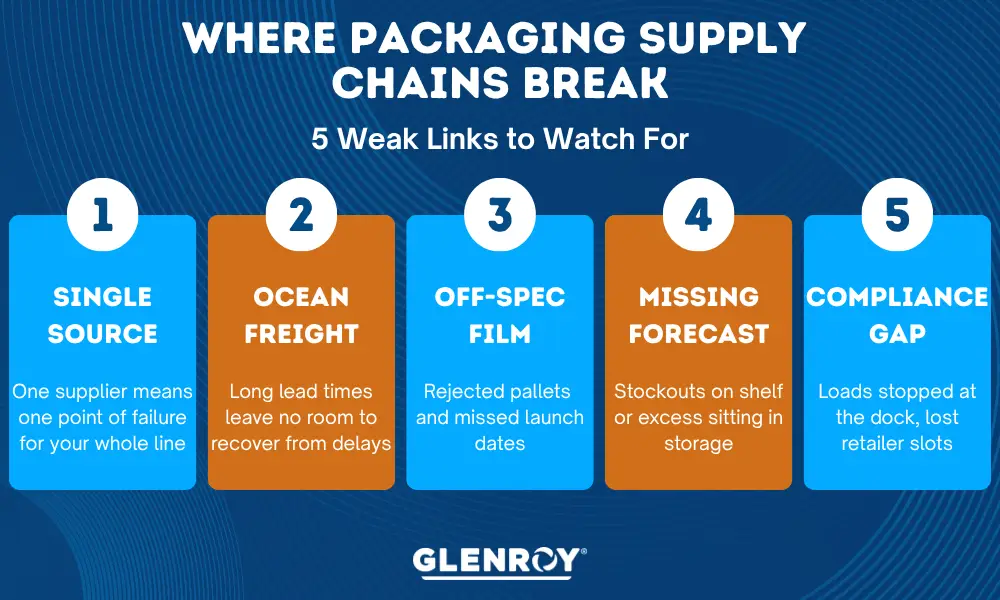
Even the best-run packaging supply chains hit turbulence. Resin shortages, port slowdowns, severe weather, and shifting tariffs are now part of the landscape. The Institute for Supply Management continues to track supply chain pressure through its monthly PMI reports, which are worth bookmarking for anyone managing procurement.
Build resilience with:
- A qualified backup supplier for top-volume SKUs
- Documented switchover procedures so a backup can ramp up quickly
- Contract terms that protect against sudden price swings
- Quarterly tabletop exercises to pressure-test your plan
Build a Packaging Supply Chain You Can Count On

When you tighten your packaging supply chain, the wins show up everywhere: lower transportation costs, fewer late shipments, better customer satisfaction, and steady business growth. Operational efficiency improves, your environmental footprint shrinks, and your brand looks more dependable to the retailers and shoppers you serve.
A strong packaging strategy needs a partner who treats your product like their own. At Glenroy, we have spent decades building flexible packaging solutions that hold up on the line, on the shelf, and at the end of life. Our U.S.-based manufacturing, engineering-led approach, and recycle-ready structures give brands a clear path to reliable packaging without trading away sustainability goals.
Ready to make your supply chain less stressful and more predictable? Contact us to talk through your project.