

The Short Answer: What Is Smart Packaging?
Smart packaging uses built-in technologies like sensors, indicators, QR codes, and RFID tags to monitor product conditions, extend shelf life, and share real-time data with brands and consumers. It falls into two main categories: active packaging (which interacts with the product) and intelligent packaging (which communicates information about the product).
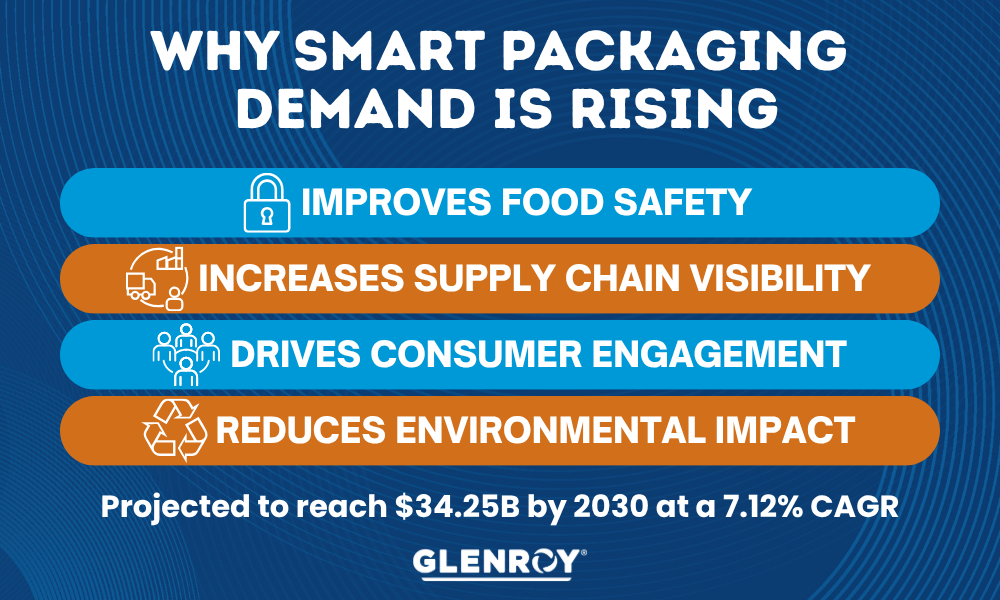
The smart packaging market is growing fast. According to Mordor Intelligence, it is projected to reach $34.25 billion by 2030, driven by rising demand for food safety, supply chain visibility, and consumer engagement. For brands in food, beverage, pharma, and fast-moving consumer goods, understanding how these packaging technologies work is the first step toward putting them to use.
What Is Smart Packaging?
Smart packaging refers to any packaging system that goes beyond basic containment and protection. It uses technology to actively interact with the product inside, communicate information to the end user, or both.
- Active packaging changes the environment inside the package to protect or preserve the product.
- Intelligent packaging monitors and reports on the condition of the product or the package itself.
Some smart packaging solutions combine both. A pouch might use oxygen absorbers (active) and a freshness indicator label (intelligent) on the same structure.
Active Packaging: How It Works
Active packaging interacts directly with the product or the atmosphere inside the package to extend shelf life, maintain freshness, or slow degradation.
Common Types of Active Packaging
Oxygen Absorbers: Small sachets or compounds built into the packaging film that remove oxygen from the headspace. Less oxygen means slower oxidation, which keeps food, pet treats, and nutraceuticals fresh longer.
Modified Atmosphere Packaging (MAP): Replaces the air inside a package with a controlled mix of gases, often nitrogen and carbon dioxide, to slow spoilage. Common in fresh meats, salads, and snack foods.
Moisture Control Systems: Desiccants or moisture-absorbing pads that regulate humidity inside the package. Used in electronics packaging, dried foods, and more.
Antimicrobial Films: Packaging materials treated with agents that inhibit bacterial growth on contact. Common in food packaging and medical device packaging.
Why Active Packaging Matters
Active packaging directly addresses food waste. According to the UNEP’s 2024 Food Waste Index Report, 1.05 billion metric tons of food were wasted worldwide in 2022. Packaging that extends shelf life, even by a few days, makes a measurable dent in that number.
For brands, longer shelf life means fewer returns, less shrinkage at retail, and better product safety.
Intelligent Packaging: How It Works
Intelligent packaging systems monitor, record, or communicate information about a product’s condition. They do not change the environment inside the package. Instead, they provide visibility into what is happening throughout the supply chain.
Common Types of Intelligent Packaging
Time Temperature Indicators (TTIs): Smart labels that change color when a product has been exposed to unsafe temperatures or stored too long. Widely used in pharma, dairy, and frozen food packaging.
Freshness Indicators: Sensors that detect chemical changes (like rising carbon dioxide or volatile compounds) inside the package. A color change tells the consumer or retailer whether the product is still safe.
RFID Tags (Radio Frequency Identification): Small chips embedded in or attached to packaging that transmit data wirelessly. Each RFID tag carries a unique identifier for real-time tracking, inventory management, quality control, and anti-counterfeiting.
NFC Tags (Near-Field Communication): Similar to RFID but designed for short-range interaction. A consumer taps their smartphone to an NFC tag on the package and receives additional information: origin details, loyalty rewards, or authentication verification.
QR Codes: Printed codes a consumer scans with their phone camera. QR codes are one of the most affordable forms of smart packaging because they require no special hardware on the package itself. They link to product details, promotional content, or sustainability certifications.
Temperature-Sensitive Labels: Ink-based or chemical indicators that react visibly to temperature changes. A simple, low-cost way to flag cold chain breaks without electronic components.
Active Packaging at a Glance
- Changes the internal environment of the package
- Examples: oxygen absorbers, MAP, antimicrobial films
- Goal: extend shelf life and preserve freshness
- Interacts directly with the product
- Usually invisible to the consumer
Intelligent Packaging at a Glance
- Monitors and communicates product conditions
- Examples: TTIs, RFID tags, QR codes, freshness indicators
- Goal: provide visibility and verify product safety
- Observes only, does not alter the product
- Often visible to the consumer through labels, codes, or color changes
How Smart Packaging Works in the Supply Chain
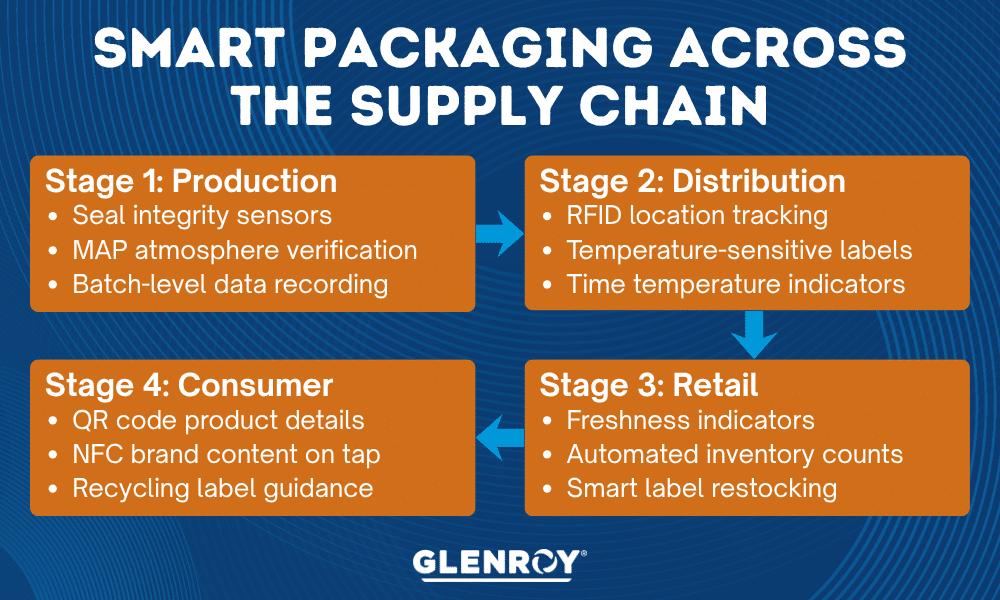
Smart packaging technology creates value at every stage of the supply chain.
At Production
Sensors and indicators integrated during packaging verify seal integrity, confirm atmosphere composition, and record batch-level data.
During Distribution
RFID tags and temperature-sensitive labels track environmental conditions in transit. If a pallet sits on a warm loading dock too long, the real-time data shows it, supporting faster quality control decisions and better supply chain management.
At Retail
Freshness indicators and smart labels give retailers a visual check on product quality. RFID-enabled packaging allows automated stock counts and faster replenishment for inventory management.
With the Consumer
QR codes and NFC tags drive consumer engagement after the product leaves the shelf. Brands use them to share recipes, usage instructions, sustainability data, and promotional offers, turning packaging into a direct communication channel.
Real-World Examples of Smart Packaging
Smart packaging is already in wide use. Here are a few practical applications:
- Meat and seafood: MAP combined with TTIs to extend shelf life and flag cold chain breaks.
- Pharmaceuticals: RFID tags for serialization and anti-counterfeiting, plus temperature-sensitive labels for biologics requiring strict cold chain compliance.
- Beverages: QR codes linking to sourcing information, nutritional content, and recycling instructions.
- Pet food and treats: High-barrier flexible pouches with oxygen absorbers for freshness, paired with QR codes for batch traceability.
- Consumer goods: NFC-enabled packaging for authentication and brand storytelling.
Why the Smart Packaging Market Is Growing
Several factors are fueling the rising demand for smart packaging across the packaging industry. (For a broader look at where the industry is heading, see our guide to flexible packaging trends of 2026.)
Food Safety and Waste Reduction
Food waste generates 8 to 10% of global greenhouse gas emissions, according to the UNEP. Active packaging that extends shelf life and intelligent packaging that flags spoilage help brands reduce waste, lower their environmental impact, and meet regulatory requirements.
Supply Chain Visibility
Global supply chains are longer and more complex than ever. Brands need real-time data on where products are and what conditions they have experienced. RFID and sensor-based packaging technologies make that possible.
Consumer Demand for Transparency
Consumers increasingly expect to know where their food comes from and whether it is safe. Smart labels, QR codes, and NFC tags give brands a direct way to deliver that additional information at the point of purchase.
Environmental Concerns
Sustainable packaging and smart packaging are converging. Brands are combining recyclable-ready structures and PCR content with smart features like QR codes that communicate location-specific recycling instructions. Reducing food waste through better packaging also reduces carbon footprint across the supply chain.
Competitive Edge
In crowded categories, innovative packaging technologies are a differentiator. A pouch with a freshness indicator or an NFC-enabled label stands out on shelf and signals quality.
Smart Packaging and Flexible Packaging: Where They Overlap
Many smart packaging applications work especially well with flexible packaging formats. Flexible films and pouches are ideal substrates for printed QR codes, smart labels, and indicator inks, and pair naturally with MAP systems.
High-barrier film laminations already control oxygen and moisture transmission rates. Adding active components like oxygen absorbers or intelligent features like TTIs to a flexible pouch structure builds on that existing performance.
Flexible packaging also supports sustainable packaging goals. Lighter weight means lower transportation emissions, and structures can be designed with recyclable-ready materials or PCR content without sacrificing the barrier performance that smart features depend on.
Smarter Packaging Starts with the Right Structure
Smart packaging gives brands better control over product quality, shelf life, food safety, and consumer engagement. Active packaging extends freshness. Intelligent packaging provides visibility. The right smart packaging solution depends on your product, your supply chain, and what information matters most to your customer.
As the packaging industry evolves, pairing smart features with the right structure is where real value shows up. That is where an experienced flexible packaging partner makes a difference.
At Glenroy, we engineer high-barrier film laminations and stand-up pouches built for performance, shelf life, and sustainability. We are committed to measurable environmental responsibility across our operations. Ready to explore smart packaging in a flexible format? Contact our team to start the conversation.