

Look Ahead: Flexible Packaging Trends in 2026
The flexible packaging industry is heading into 2026 with serious momentum. 2025 brought new sustainability mandates, rising consumer expectations for convenience, and mounting pressure on brands and their packaging partners to adapt faster than ever. The industry responded with innovation across the board: recyclable film structures, premium matte finishes, smart packaging technologies, high-barrier solutions, and a renewed focus on speed to market.
Now, the bar is even higher. Brands want packaging that looks premium, performs better, ships faster, and leaves a smaller environmental footprint. That’s a tall order. The companies that will thrive in 2026 will be the ones that deliver on all four.
Sustainability Stops Being Optional
In 2025, environmental concerns moved from marketing talking points to major priorities, driven by a combination of regulatory pressure, consumer demand, and genuine corporate commitment to reducing environmental impact.
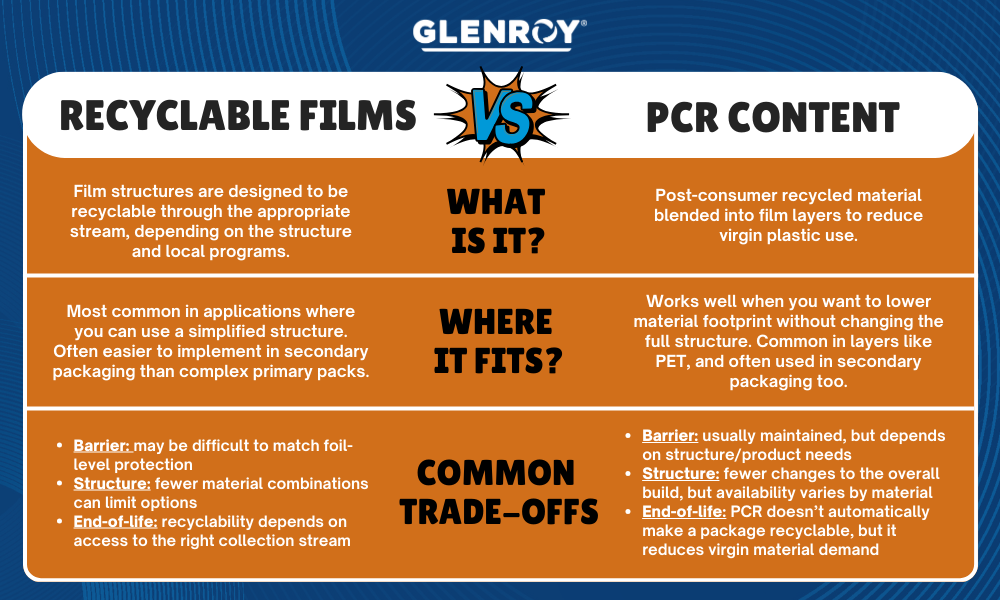
Recyclable and PCR-Content Films Continue to Gain Ground
Mono-material structures and store drop-off recyclable film options continue to be top-of-mind. Brands increasingly demand packaging that qualifies for How2Recycle labeling, and converters who can’t deliver will find themselves out of the conversation.
Post-consumer recycled (PCR) content moves from “nice to have” to an expected option at comparable prices to virgin materials. More brands are incorporating PCR into their flexible packaging to meet sustainability goals and circular economy commitments.
Regulations Added Urgency
Extended Producer Responsibility (EPR) laws in California, Oregon, and Maryland are reshaping how brands think about packaging end-of-life. Across the Atlantic, the European Union’s Packaging and Packaging Waste Regulation set strict requirements that will only tighten in the coming years. For brands selling in multiple markets, sustainable packaging solutions aren’t just good PR. They’re a regulatory requirement.
Matte Finishes Own the Shelf
Sometimes the trends that matter most are the ones you can touch. In 2026, matte finishes will continue their takeover of retail shelves, and for good reason. A matte finish creates a sophisticated, modern look that photographs beautifully and feels premium in hand.
Spot Matte Creates Visual Depth
Spot matte options combine matte and gloss finishes on the same package. This technique lets designers make specific elements pop: a glossy logo against a matte background, or a shiny product image that catches the light while the rest of the pack stays soft and understated. It’s a subtle effect that creates visual depth and stands out on the shelf.
Soft-Touch Coatings Invite Engagement
These velvety finishes invite consumers to pick up the package and hold onto it a little longer. In a world where consumer preference increasingly favors premium experiences, that extra moment of tactile engagement can make the difference between a sale and a pass. Award-winning flexographic printing makes these finishes stand out.
Convenience Becomes Non-Negotiable
Consumers have little patience for packaging that fights back. Easy-open and easy-tear features will move from differentiator to baseline expectation.
Easy-Tear Films Meet Rising Expectations
Films that tear cleanly without scissors, laser scoring that guides the tear path, and intuitive tear notches all will grow in demand. A frustrating opening experience can sour a customer on your product before they even taste it. A clean, effortless tear feels premium and reinforces quality.

Refill Pouches Reduce Waste and Build Loyalty
Spouted and fitment pouches let consumers refill rigid containers at home, cutting down on single-use plastic and reducing shipping weight. It’s a win for sustainability and a win for brands looking to build loyalty through refillable packaging programs. The format works particularly well for personal care, household cleaners, and beverages.
Portability Stays a Priority
On-the-go lifestyles continued to drive rising demand for single-serve formats like stick packs, sachets, and travel-sized pouches. Add in the influence of online shopping, and brands had to think harder about how packaging performs not just on the shelf, but in an e-commerce shipping box traveling across the country.
High Barrier Films Protect What Matters
No matter how good your packaging looks, it fails if the product inside doesn’t survive the journey. In 2026, high-barrier films will remain a top priority for brands in food packaging and pharmaceutical applications where product integrity is everything.
Food and Pharma Demand More Protection
Enhanced barrier properties protect against oxygen, moisture, and light, extending shelf life and keeping products fresh longer. For nutraceuticals and pharmaceuticals, where potency and safety are paramount, foil laminations and advanced barrier coatings are non-negotiable. The pharmaceutical flexible packaging segment continues to grow at over 6% annually.
Smart Packaging Gets Smarter
The connected package is no longer a futuristic concept. In 2026, smart packaging technologies move from pilot programs to real-world implementation.
RFID Enables Better Traceability
Radio-frequency identification labels are enabling enhanced traceability throughout the supply chain, from production floor to retail shelf to consumer home. For brands managing complex distribution networks, this visibility translates to fewer losses, faster recalls when needed, and better inventory management.
QR Codes Became a Gateway to Digital Engagement
Consumers now scan codes to access product information, verify authenticity, unlock loyalty programs, and engage with brand content. For brands, packaging became a gateway to digital relationships that extend well beyond the point of purchase. Regulatory requirements are also accelerating adoption, as food safety regulations increasingly require traceability.
Speed to Market Separates Winners from Everyone Else
Here’s a truth that defined 2025: “We’ll get back to you” wasn’t good enough. Brands launched products faster than ever, and packaging partners who couldn’t keep up got left behind.
Accelerated Printing Timelines
Shorter print runs, faster turnaround times, and the ability to iterate on designs makes it easier for brands to test new products, run seasonal promotions, and respond to market trends in real time.
U.S.-Based Manufacturing Offers a Clear Advantage
Domestic production means shorter shipping distances, more responsive technical support, and the ability to solve problems without waiting for answers across time zones. In a year defined by supply chain uncertainty, that reliability mattered more than ever.
Ready for 2026? Partner with a Team Built for What’s Next
Brands need partners who can deliver sustainable solutions without sacrificing performance, premium aesthetics without blowing the budget, and speed without cutting corners on quality.
Glenroy has spent over six decades helping brands navigate exactly these challenges. As a U.S.-based manufacturer, we offer the responsiveness and quality control that overseas suppliers can’t match. Our capabilities span the trends that will define this year:
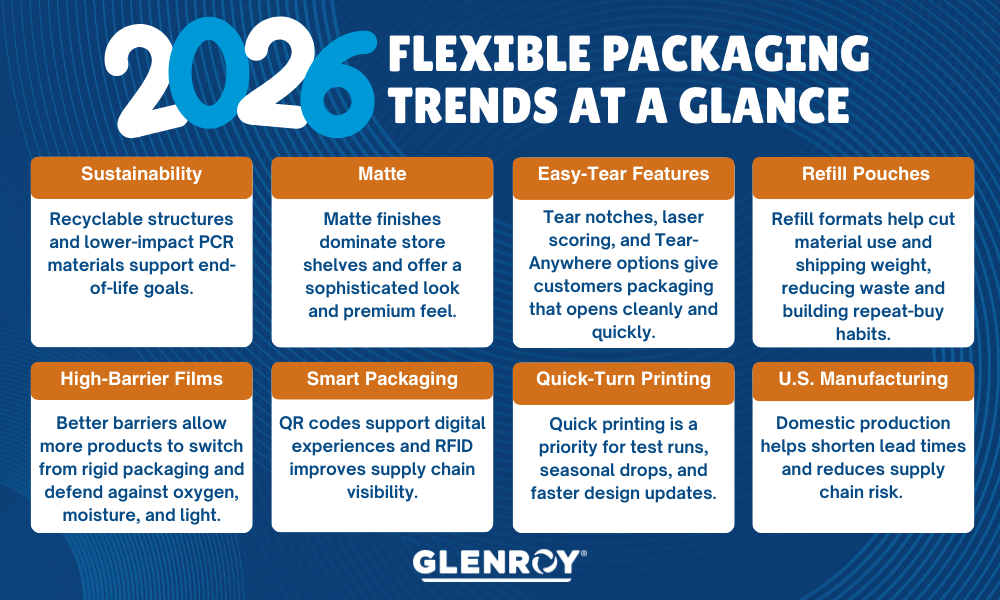
- Recyclable films and PCR options to meet your sustainability goals
- Award-winning printing with matte, spot matte, and soft-touch finishes
- Easy-tear films and spouted pouches for consumer convenience
- High-barrier laminations for food, pharmaceutical, and nutraceutical applications
- Faster lead times backed by responsive technical support
We’re not just selling film. We’re partnering with brands to solve packaging challenges and build packaging that performs. Ready to tackle 2026 with a packaging partner who gets it? Let’s talk.