
Understanding Laminated Packaging: The Key Differences Between Adhesive and Extrusion Lamination
At a Glance: Adhesive lamination bonds film layers together with a curing glue, while extrusion lamination uses a thin layer of molten plastic as the bonding agent. The right choice depends on your product chemistry, barrier needs, run speed, and budget.
Laminated packaging is built from two or more layers of material joined into one structure. Each layer does a job: from printing to barrier protection to sealing. How those layers get bonded matters more than most brands realize. The bonding method affects barrier properties, seal integrity, runnability on your filling line, and cost.
What Is Laminated Packaging?
Laminated packaging combines multiple plastic films, foils, or paper substrates into a single flexible structure. A typical flexible packaging film might pair a printable outer layer with a barrier middle and a heat-sealable inner layer.
Why bother with multiple layers? Because no single material does everything well:
- Barrier protection: Aluminum foil and specialty films block oxygen, moisture, and light
- Print quality: An outer layer like polyethylene terephthalate (PET) holds sharp graphics
- Seal integrity: A sealant layer locks the package
- Structural strength: Stacked layers add mechanical strength and puncture resistance
The two main ways to bond these layers are adhesive lamination and extrusion lamination. Both produce strong, functional laminated packaging; they just get there differently.
Adhesive Lamination: Bonding With Glue
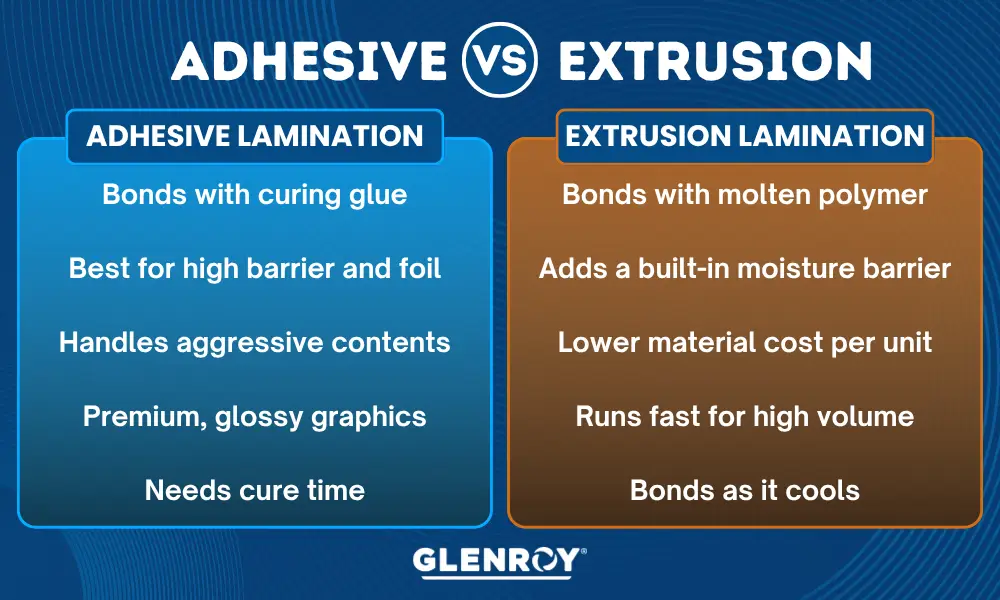
Adhesive lamination joins layers using a liquid adhesive that cures into a solid bond. The adhesive is applied to one web, then the two webs are pressed together and allowed to set.
There are a few adhesive systems in common use:
- Solventless: A two-part system (often a polyurethane) that cures through a chemical reaction. It is the workhorse of the flexible packaging industry because it produces a very strong bond with no solvents to drive off.
- Solvent-based: Adhesive carried in a solvent that evaporates during drying. Reliable, but it requires solvent capture and adds cost.
- Water-based: Lower-emission systems used in specific applications.
Where Adhesive Lamination Shines
Adhesive lamination handles a wide range of substrates, which makes it the go-to method for complex, high-barrier structures.
- Substrate versatility: It bonds dissimilar materials like PET, foil, and kraft paper that do not want to stick to each other on their own.
- High-barrier builds: When you need foil or specialty barrier films for long shelf life, adhesive lamination delivers.
- Clarity: Adhesives can produce a clear, glossy surface that supports premium graphics and visual appeal.
- Aggressive contents: A well-chosen adhesive system stands up to oils, solvents, and other hard-to-hold products.
The Tradeoffs
- Adhesive needs a cure time before the film is ready to convert or fill.
- The adhesive layer is thin and can be brittle, which puts stress on the fin seal area where leaks tend to start.
- Solvent-based systems carry handling and environmental considerations.
Extrusion Lamination: Bonding With Molten Plastic
Extrusion lamination skips the glue and instead extrudes a thin layer of molten plastic, usually polyethylene, between two webs. That molten polymer acts as both the tie-layer and a functional layer in the finished structure, bonding everything as it cools.
Where Extrusion Lamination Shines
- Built-in function: The extruded polymer adds a moisture barrier and seal layer at the same time it bonds, so you get more out of every pass.
- Cost efficiency: Resin pellets generally cost less than a roll of pre-made film. Replacing a film layer with extrudate can lower material cost per square inch.
- Strong, flexible bond: A polyethylene tie-layer resists flex cracking and holds up through distribution.
- Speed: Extrusion lines run fast, which supports high-volume production.
The Tradeoffs
- Extrusion runs hot; the high temperature may limit the heat-sensitive substrates you can use.
- Dialing in the extrusion process takes engineering. If extrusion parameters drift, you can get poor adhesion and delamination.
- Solvent-based systems carry handling and environmental considerations.
Adhesive vs Extrusion: A Side-by-Side Look
| Factor | Adhesive Lamination | Extrusion Lamination |
| Bonding agent | Curing adhesive | Molten polymer (often PE) |
| Substrate range | Very broad, including foil and PET | Broad, but heat-sensitive films are limited |
| Barrier potential | High, supports foil builds | High, supports foil builds, adds moisture resistance |
| Cure time | Needs time to set | Bonds as it cools |
| Best Uses | High barrier, premium graphics, aggressive contents | High-volume runs, moisture barrier, wide widths |
Neither method is universally better. A converter with both capabilities can even combine them in hybrid structures that use extrusion and adhesive bonds in the same film. That flexibility lets engineers tune barrier properties, mechanical properties, and cost to fit one product instead of forcing the product to fit one process.
How to Choose the Right Lamination Method
Start with the product, not the process. These factors point you toward the right answer:
- Product chemistry: Oily, acidic, or solvent-heavy contents need a bond that resists chemical attack.
- Barrier and shelf life targets: Long shelf life for food packaging or sensitive consumer goods usually means a high barrier structure.
- Fill method and run speed: High-speed form, fill, and seal lines reward films that run consistently. Both methods can deliver this when engineered well.
- Budget: When the cost per unit is tight, extrusion lamination’s wide widths and resin economics can win.
- Sustainability goals: Recyclable-ready mono-material structures and downgauged films are shaping how brands pick materials and bonding methods alike.
If you are weighing formats too, Glenroy provides all customers with a dedicated product development engineer to evaluate your project and suggest laminations to fit your product and filling machines. We also have manufacturing engineers to offer on-site support when running our film.
Lamination and Sustainability
Sustainability is now a packaging design factor, not an afterthought. Flexible laminated structures already use less raw material than rigid alternatives, and they make up only about 4% of the packaging material in U.S. landfills by volume.
Smart material choices push that further:
- Mono-material designs: All-polyethylene or all-polypropylene structures are easier to recycle than mixed-material builds.
- PCR content: Post-consumer recycled material reduces virgin plastic use.
- Downgauging: Thinner films that still hit barrier targets cut waste at the source.
The bonding method plays into recyclability. A structure designed for the recycling process from the start is a smarter sustainable packaging solution than one retrofitted later. The Flexible Packaging Association publishes life cycle data that backs up these tradeoffs with numbers rather than vague claims.
For a deeper look at our approach, see our sustainable flexible packaging resources.
Common Failure Modes to Watch For
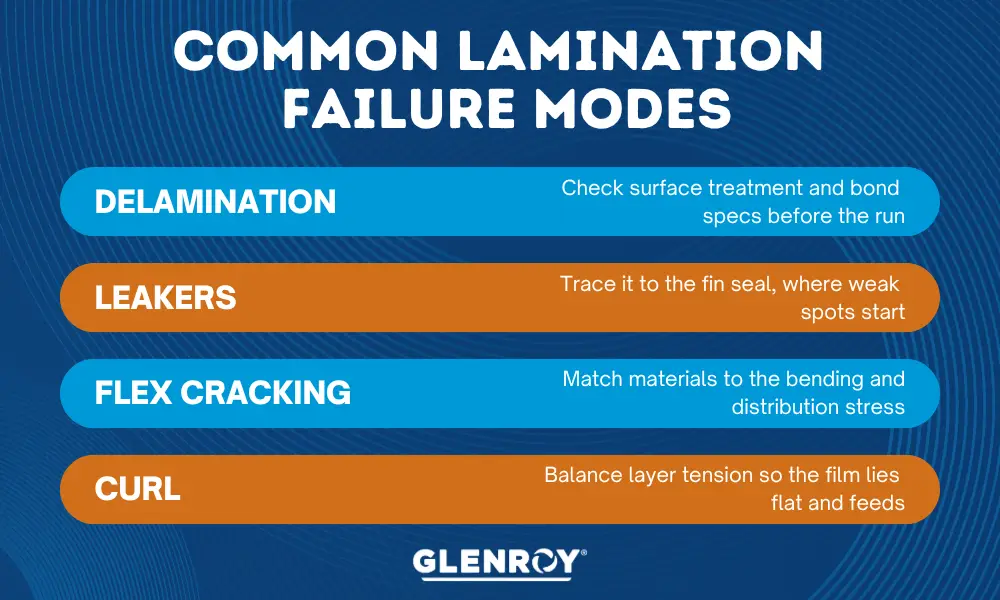
Troubleshooting is normal. Here is what tends to go wrong and why:
- Delamination: Layers separate. Usually traces back to poor surface treatment, off-spec adhesive cure, or extrusion parameters out of range.
- Leakers: Most start at the fin seal, where clamping stress finds any weak spot in a brittle bond. A thin, brittle adhesive layer can struggle to normalize those stresses, which is why seal design matters.
- Flex cracking: Repeated bending breaks down a layer, often the barrier. Material selection and structure design prevent it.
- Curl: Uneven layer tension makes the film curl and run poorly on the line.
Catching these in prototyping beats catching them on a filling line. That is where engineering support earns its keep.
Matching the Lamination Method to Your Product
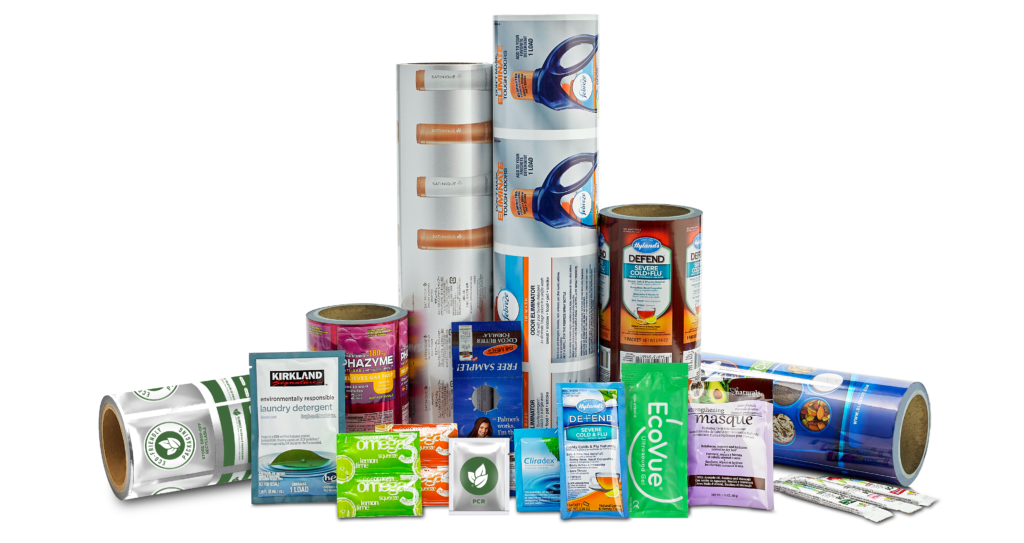
Adhesive lamination bonds layers with a curing glue and excels at high-barrier, premium, and chemically aggressive applications. Extrusion lamination bonds with molten polymer, adds moisture resistance, and often costs less for high-volume runs. The right pick comes down to your product, shelf life, line speed, and budget, and sometimes a hybrid of both is the smartest structural design.
At Glenroy, we run both adhesive and extrusion laminating in-house, backed by U.S.-based engineering and decades of converting experience. That means we match the process to your product, not the other way around, with recyclable-ready and PCR options when sustainability is on the table.
Ready to engineer packaging that runs predictably and protects what is inside? Contact Glenroy today and let our team help you build the right structure.