
Copacking Checklist: What to Prepare Before Production
The Short Answer: Before production day, lock in your product and packaging specs, source materials with backups in place, finalize artwork and labeling, and document your quality control plan. The more your contract packager knows upfront, the fewer surprises (and changeover costs) you hit on the production line.
Bringing a new product to a co-packer is part product launch, part group project. Your contract packager has the equipment and years of experience to run the job, but they can only run what you give them. Missing specs, late artwork, or unclear quality rules turn a smooth first production into a long week of phone calls and rejected pallets.
Why Preparation Matters Before Production Day
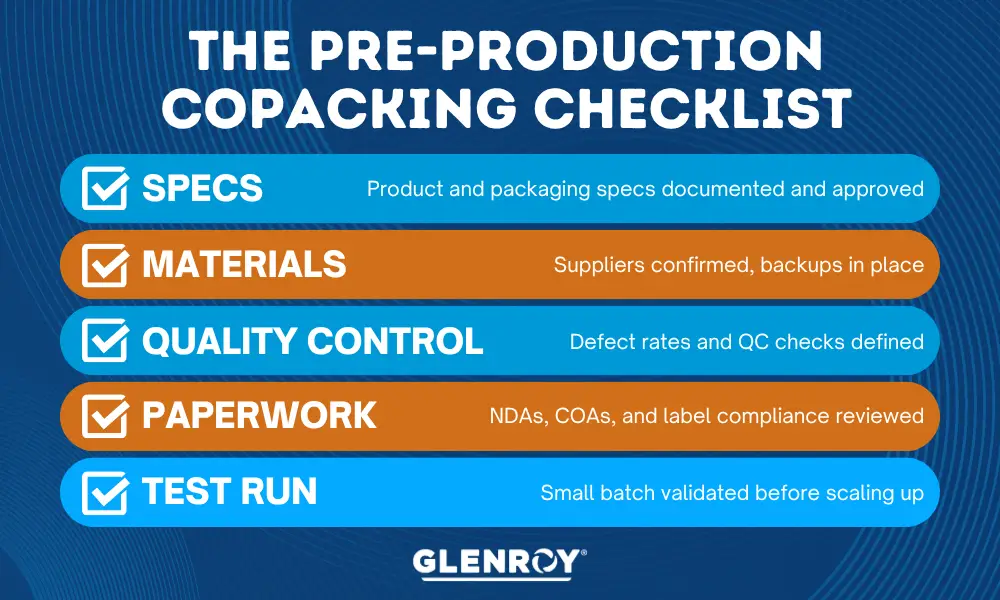
Copacking works best when both sides treat the kickoff like a structured handoff, not a casual intro call. A contract packager runs dozens of brands through their facility, often back to back, with tight changeover windows. The more polished your inputs, the better your final product comes off the line.
What good prep prevents:
- Production delays from missing or conflicting specs
- Off-spec finished product that gets rejected at the warehouse
- Material shortages that pause the entire packaging process
- Compliance issues that block the product from store shelves
- Cost overruns from scrap, rework, or extra changeovers
The Contract Packaging Association notes that early, detailed communication is one of the strongest predictors of a smooth copacking relationship. Bring your checklist, not just your purchase order.
Nail Down Your Product and Packaging Specs
Specs are the source of truth. Your co-packer’s quality assurance team will measure every run against them, so vague answers cost you later.
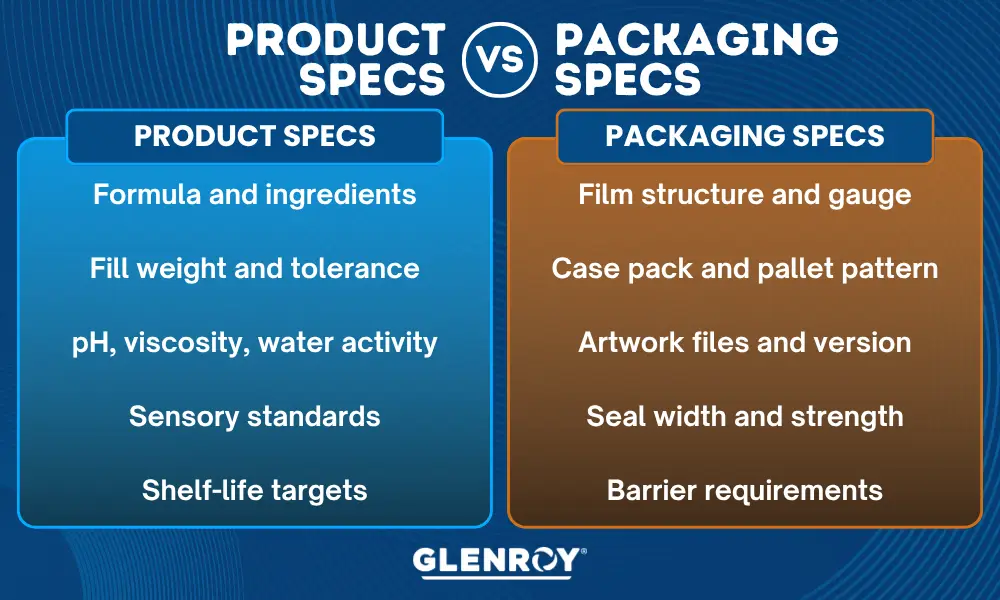
Product Specifications
Write these out before you ever request a quote:
- Formula, ingredient list, and any allergen statements
- Target fill weight or volume with tolerance ranges
- Viscosity, pH, water activity, and other product chemistry details
- Sensory standards (color, flavor, aroma, texture)
- Shelf-life targets and storage conditions
- What counts as a defect, in plain language
For a beverage, that includes carbonation level, brix, and torque on the cap. For a food product, that includes moisture content and headspace. For a small batch run, it still includes all of it.
Packaging Specifications
Your packaging specs need to be as detailed as your product specs:
- Primary packaging structure (film, pouch, bottle, can) with dimensions and gauge
- Secondary packaging details (case pack count, case dimensions, pallet pattern)
- Approved artwork files with version numbers and approval dates
- Label placement tolerances and orientation
- Seal width, seal strength, and any easy-open features
- Barrier requirements based on shelf-life targets
If your co-packer is also handling labeling services, give them artwork as production-ready files, not concepts. Going back and forth on a logo color shouldn’t happen the week of production.
Get Your Materials and Suppliers Lined Up
Raw materials, films, caps, closures, labels, and shippers all need to land at the facility before production. Late materials are the single most common cause of pushed production dates.
A material readiness checklist:
- Confirm minimum order quantities with each supplier and match them to your run size
- Build in buffer stock for items with long lead times, like specialty films or printed pouches
- Qualify a backup supplier for your top-volume components
- Share supplier contacts and lot information with your co-packer’s receiving team
- Confirm delivery dates in writing, not just over email
For a small business or a brand running a new product, this is where minimum order quantities can sting. Talk to your contract manufacturer early about how they handle short runs, and look for a product manufacturer that has flexibility built into their scheduling.
Build Your Quality Control Plan
A co-packer will run their own quality control, but your brand sets the standard. Document what “passing” looks like before the line starts.
Include in your QC plan:
- In-process checks (fill weights, seal integrity, code dates) and their frequency
- Hold-and-release procedures for the finished product
- Retain sample requirements (how many, how stored, how long)
- Acceptable defect rates by category (critical, major, minor)
- Who has the authority to stop the line if something is off
- How a non-conforming product gets handled and documented
If you sell into the food industry or food manufacturing space, your QC plan needs to align with the food safety standards your co-packer follows, like SQF, BRCGS, or AIB certification. The FDA’s Food Safety Modernization Act sets the federal baseline for preventive controls, and many retailers add their own audit requirements on top.
Handle the Paperwork and Compliance
Compliance paperwork rarely gets attention until something is missing and a shipment is stuck at the dock.
Pull these together before kickoff:
- Mutual NDA and master services agreement
- Product specification sheets signed by both parties
- Certificates of analysis (COAs) for incoming raw materials
- Allergen statements and ingredient sourcing documentation
- Label compliance review (FDA, USDA, FTC, state-specific rules)
- Insurance certificates and indemnification language
- Lot coding and traceability requirements
For private label work, clarify intellectual property ownership and who controls the artwork files. For functional beverages, confirm any structure-function claims are reviewed before they hit the label.
Plan Logistics and Production Scheduling
Your packaging needs do not end when the last pouch comes off the line. Where does it go next?
Logistics questions to answer in advance:
- Where does the finished product ship, and on what carrier?
- Are you using the co-packer’s warehouse or your own?
- What are the lead times from production completion to dock-ready?
- Who handles freight booking, and who pays for it?
- How does inventory data flow back to your team?
Build production scheduling around realistic timelines. Most new product launches need around 4 to 6 weeks of lead time once specs are locked, longer if printed packaging is on a long lead. Plan around those timelines instead of hoping to beat them.
Run a Test Before Full Production
Test runs are the cheapest insurance you can buy. Even seasoned contract packagers want to validate a new product on their lines before scaling up.
What a good test run includes:
- A small batch (often 1 to 5 pallets) under production conditions
- Full QC checks on the test product
- A line walk with your product manager and the co-packer’s team members
- Documentation of any changeovers, line speed, and scrap rate
- A formal sign-off before scaling to full production
If something breaks in the test run, fix it on paper and rerun. If everything passes, you have a documented baseline to compare every future production line run against.
Build a Copacking Relationship That Scales
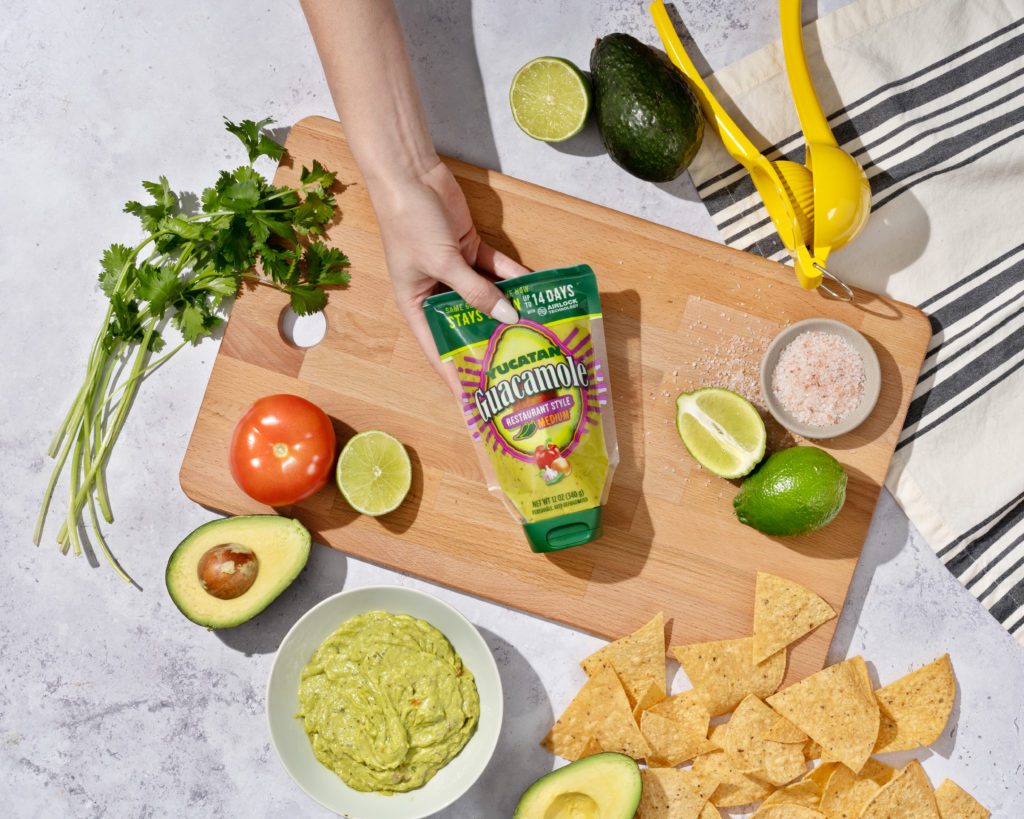
A copacking checklist is only as good as the partner you hand it to. The best contract packagers spot gaps in your prep before they become problems, and the best brands treat their co-packer as a long-term part of their supply chain, not a one-time vendor.
At Glenroy, we work alongside brands and contract packagers every day to deliver packaging solutions that hold up on the line and on store shelves. Our flexible packaging films and stand-up pouches are engineered for runnability, high-quality print, and consistent seal performance, which is exactly what your co-packer needs to keep changeovers short and reject rates low.
Ready to set your next product line up for a smoother first run? Contact us to talk through your packaging needs.