

The Short Answer: What is Mono-Material Packaging?
Mono-material packaging is a flexible package built from a single polymer family, so it moves through the recycling process as one clean stream. It replaces traditional laminates that mix different materials (like polyesters plus aluminum foil), which usually get rejected from curbside recycling.
Brands moving toward the circular economy have a problem. Most flexible packaging today is made from two or three layers of different plastics bonded together, sometimes with a layer of aluminum foil mixed in. Those combinations protect the product well, but they create a recycling headache. A mono-material package solves that by using one polymer from top to bottom. You still get a working package. Recyclers still get a material they can actually process. That balance is why mono-material packaging has become one of the fastest-growing topics in the packaging industry.
Why Mono-Material Matters
Traditional flexible packaging is a composite material. A snack bag, for example, might be PET printed on the outside, bonded to aluminum foil, and bonded to a polyethylene sealant. Each layer has a specific purpose (print surface, oxygen barrier, seal layer), but once laminated, those different materials can’t be separated in the current recycling infrastructure in the United States.
The result:
- Most flexible laminates end up in a landfill or incineration
- Plastic waste from food and personal care grows every year
- Brand owners miss their public sustainability goals
- Municipalities blame plastic packaging for the packaging waste problem
The scale of the problem is well documented. The U.S. EPA reports an overall plastics recycling rate of roughly 8.7%, with flexible films recovered at an even lower rate. Mono-material packaging fixes the sorting problem that drives those numbers. A PE mono-material pouch goes into the PE recycling stream. A PP pouch goes into the PP stream. That’s the core of easy recyclability.
Mono-Material in Plain Terms
A mono-material package is any packaging solution where roughly 90% or more of the structure comes from one polymer family. The most common options are:
- PE mono-material (polyethylene): soft, sealable, compatible with store drop-off and growing curbside streams
- PP mono-material (polypropylene): stiffer, higher heat resistance, good for hot-fill and retort products
- PET mono-material (polyethylene terephthalate): common in plastic bottles and some rigid trays, with strong clarity and barrier qualities
The goal across all three is the same: keep the structure simple enough to feed into an existing recycling process instead of a landfill.

How It Compares to Traditional Flexible Packaging
A traditional lamination uses two to five different materials layered together. A mono-material solution uses one polymer family. That single difference changes almost everything downstream.
Recyclability
Today, a custom lamination usually has no path forward and heads to the landfill. A mono-material package can go to store drop-off or curbside collection, where accepted.
Barrier Property
Laminations often lean on aluminum foil for oxygen and moisture protection. Mono-material packages achieve similar numbers through coatings, metallization, or MDO-PE films.
Machinability
Custom laminations are well-established on existing equipment. Mono-material structures are catching up fast and run on most lines with minor adjustments (seal temperature, dwell time, tension).
Cost
Laminations are often lower costper square inch up front. Mono-material structures can be comparable and sometimes higher, though extended producer responsibility fees are narrowing the gap quickly.
Circular Economy Fit
There is no contest here. A mono-material structure is built for recovery. A multi-layer lamination is not.
No single structure is the ideal solution for every product. The right answer depends on product chemistry, shelf life, and distribution. For a deeper look at that tradeoff, our rigid vs flexible packaging guide lays out how format choice plays in.
Barrier Performance in a Single Material
The biggest technical challenge with monomaterial packaging is matching the barrier performance of a foil laminate using only one polymer. Flexible packaging lives or dies on barrier. If your oxygen transmission rate is too high, your product oxidizes. If your moisture barrier is weak, dry goods go stale.
Today’s mono-material barrier structures get there through a few levers:
- Machine direction oriented PE (MDO-PE): stiffer film that holds print well and provides a stable base for coatings
- Metallized layers of the same polymer: a very thin aluminum coating that stays below thresholds that would disqualify the structure from recycling
- Barrier coatings (EVOH, SiOx, AlOx): applied in thin layers to hit oxygen and moisture targets
- Co-extruded sealant layers: built into the same polymer family for seal integrity
For most dry foods, personal care, and household products, a well-engineered mono-material package now hits barrier numbers that used to require foil. See our high-barrier film laminations page for structure options.
Common Formats Built as Mono-Material
Mono-material structures run on most of the formats you already know:
- Stand-up pouch: the most common mono-material format, with strong shelf impact and easy-open options
- Flexible pouch (pillow, flat, three-side seal): lightweight and efficient for snacks, powders, and dry mixes
- Lidding films: matched to a mono-material tray for full-package recyclability
- Rollstock: fed into form-fill-seal lines for high-volume production

Our stand-up pouches and flexible packaging films are available in mono-material constructions for brand owners moving toward recyclable packaging without giving up shelf appeal.
Tradeoffs to Know Before You Switch
Mono-material is smart engineering, but it’s still engineering. Things to plan for:
- Heat resistance: PE sealants soften at lower temperatures than PET, so seal jaw temperatures and dwell times need to be retuned
- Stiffness: MDO-PE helps, but some lines still need adjustments to run at full speed
- Barrier matching: for high-sensitivity products (coffee, nuts, oxygen-sensitive nutraceuticals), barrier coatings must be specified and tested against real shelf life
- Print behavior: new packaging films may require adjusted inks and anilox settings on a flexo press
Work through each of these with your converter before the first commercial run, not after. Design choices can also be validated against the Association of Plastic Recyclers APR Design Guide, the North American standard for recycling compatibility. When you see a film labeled “APR Preferred,” it has been tested against those criteria.
Mono-Material and the Circular Economy
Mono-material design sits at the center of every serious roadmap for flexible packaging sustainability. The Ellen MacArthur Foundation’s flexible packaging overview calls out transitioning multi-material flexibles (roughly 40% of the flexible packaging market) to mono-materials as one of the highest-impact moves available to brand owners. Pair that with post-consumer recycled (PCR) content and downgauged film structures, and the carbon footprint math starts to look very different.
Who Benefits from Mono-Material Packaging?

Mono-material is a fit for brand owners looking to:
- Meet public sustainability goals and extended producer responsibility (EPR) requirements
- Lower their carbon footprint by simplifying supply chain materials
- Qualify for How2Recycle store drop-off or curbside claims
- Maintain shelf life and product protection while moving away from aluminum foil
- Build a sustainability story that holds up under third-party review
It’s also a win for converters and co-packers who want fewer surprises on the line and a cleaner environmental impact story for their own operations.
Where Glenroy Fits In
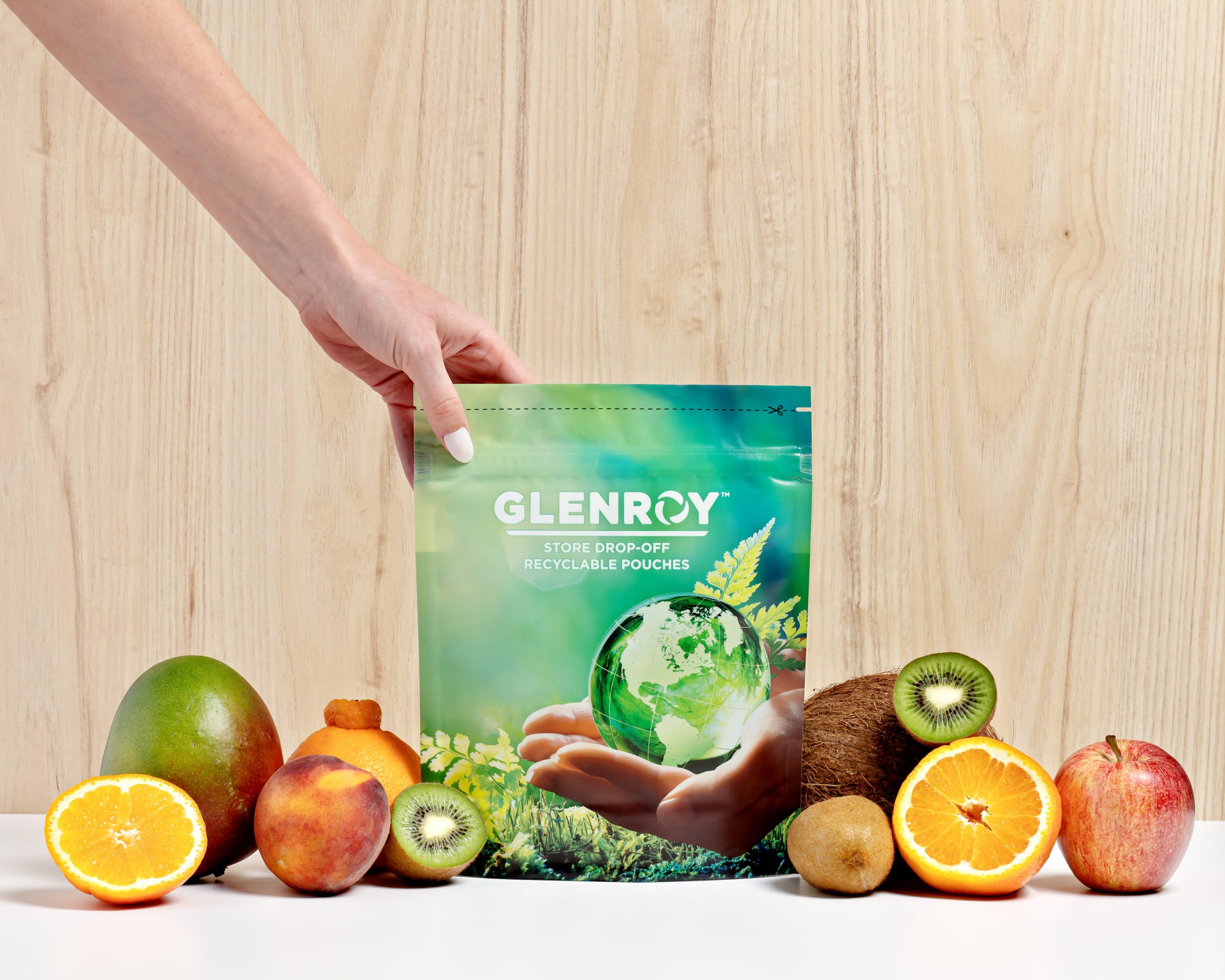
Mono-material packaging is where the flexible packaging market is heading, and we’ve been building toward it for years. Glenroy engineers high-barrier film structures and recyclable pouches in our U.S. facility, with in-house lamination, printing, and pouch making on a single campus. That means fewer hand-offs, tighter quality control, and innovative solutions that run on your line the way the spec says they will.
If you’re weighing a move to monomaterial packaging and want a straight answer on barrier, cost, and timeline, contact our team. We’ll pressure-test your product, your line, and your sustainability goals, then recommend a mono-material package that holds up in the real world. We know what we’re doing, and we’ll tell you the truth.