
Sachet vs. Stick Pack Packaging: Which Is Right for Your Product?
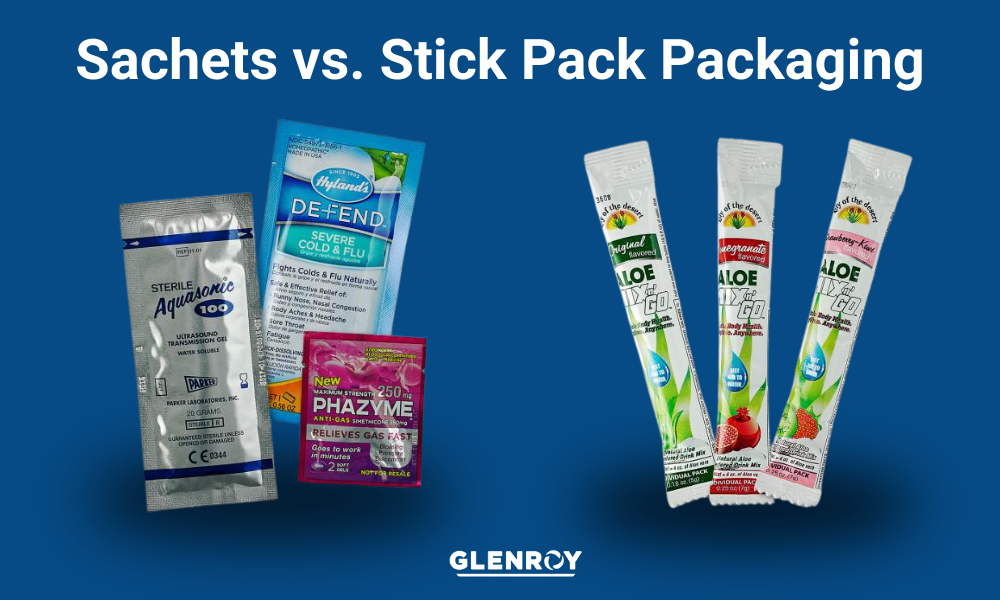
Quick Comparison: Sachet packaging and stick pack packaging are both excellent single-serve packaging options, with sachets being flat with three or four-sided sealing ideal for samples and on-the-go products, while stick packs feature a long, tubular design perfect for powder and liquid products that mix with liquids. Your choice between these packaging formats depends on your product type, packaging materials, and production requirements.
The packaging industry is experiencing a significant shift toward single-use packaging solutions, driven by changing consumer lifestyles and the increasing demand for convenience. Sachets (flat, sealed pouches) and stick packs (slender, tubular packages) represent two popular flexible packaging options in this growing market segment. Both formats offer distinct advantages for different products and applications.
Looking to choose between sachet vs stick pack packaging? Each packaging format offers unique features for different product needs and market requirements. Understanding these key differences will help you make the optimal choice for your specific packaging requirements and operational needs.
Physical Characteristics and Design
Sachet Design Profile
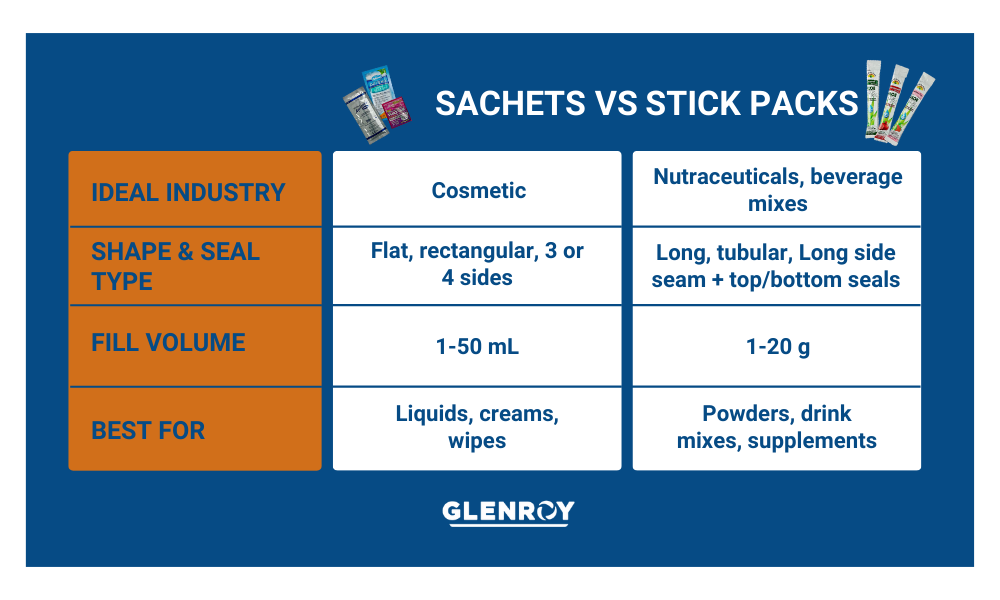
Sachet packaging features a flat, envelope-like construction with three or four sealed edges creating a secure pouch. These flexible packaging solutions accommodate various dimensions, though they typically maintain a width-to-length ratio close to 1:1. The flat design allows sachet packs to lie completely flat when empty and expand slightly when filled, making them practical for storage and shipping.
Stick Pack Architecture
Stick pack packaging stands apart with its distinctive tubular shape and narrow shape orientation. A continuous side seam runs the length of the stick pack, created by forming the film into a cylinder before sealing the top and bottom edges. These stick packaging units follow a characteristic long, slim profile with a length typically four times greater than the width. Common dimensions range from 40 to 200 millimeters in length, though custom sizes are possible for specific packaging requirements.
Design Comparison
The visual and structural differences between sachet vs stick pack packaging influence their practical applications. Sachets present a wider, flatter profile that works well for products requiring a broader surface area, while stick packs offer a more concentrated, vertical presentation. The sealing methods also differ significantly—sachet packages employ edge seals that create a perimeter closure, whereas stick pack machines combine a longitudinal seam with top and bottom seals. These distinct packaging formats affect not only appearance but also how the package dispenses product and fits into retail displays or consumer use scenarios.
The flat construction of sachets allows for larger printing areas on both sides, while stick packets maximize vertical space for branding and product information. Both packaging options can incorporate various opening features, from tear notches to perforated edges, tailoring the user experience to specific product needs.
Product Compatibility and Usage
When selecting between sachet packaging and stick pack options, product compatibility plays a defining role in determining the best packaging format for your specific application. The choice between these packaging solutions often comes down to practical considerations about your product’s consistency, usage method, and portion control requirements. Understanding the optimal applications for each format can help guide your decision-making process.
Optimal Applications for Sachets
Sachet packages excel in applications where a wider, flatter profile benefits product delivery. These flexible packaging pouches work particularly well for liquid products and personal care products like shampoo, conditioner, and face masks, as well as single-serve products including ketchup, mayonnaise, and salad dressings. They’re ideal for sample sizes of lotions and cosmetics, over-the-counter medications like pain relievers and cold remedies, products that require squeezing or spreading, and items that need to fit easily in wallets or small pockets.
Optimal Applications for Stick Packs
Stick pack packaging, with its distinctive narrow shape and slim profile, is ideally suited for various products. They’re perfect for powder products that mix with liquids, drink mix options, and beverage mixes. These stick packets work exceptionally well for nutritional supplements and instant coffee, as well as single-serve tea. They’re also ideal for spice blends and seasonings, especially products requiring precise pouring or dispensing. Their slender design makes them particularly convenient for items that need to fit in cup holders or narrow spaces, offering both functionality and practicality in everyday use.

Manufacturing Considerations
When comparing sachet vs stick pack packaging options, manufacturing and cost considerations play a significant role in the decision-making process. Stick pack machines typically achieve high-speed production, with fill rates reaching up to 1,000 units per minute for powder products. Sachet packaging, featuring three or four-sided sealing, generally operates at slower speeds but offers more flexibility in package dimensions.
Production Requirements
Stick pack machine equipment requires specialized vertical form-fill-seal machinery designed for its distinctive narrow shape. These production lines need precise calibration to maintain the characteristic side seam and end seals. Sachet machines, while more common, use horizontal or vertical platforms that accommodate different shapes. Both packaging formats demand regular maintenance and skilled operators, though stick packaging lines often need more specialized training.
Material Specifications
Film structures vary between the formats, with stick packs typically using thinner gauge materials due to their design efficiency. Both sachet and stick pack packaging need materials with appropriate barrier properties to protect product integrity. Stick packets generally require stronger seal strength at the side seam, while sachet packs need uniform sealing capabilities across all edges. The film selection impacts both shelf life and machine performance.
Make the Smart Choice: Sachet vs. Stick Pack Packaging for Your Brand’s Success
Choosing between sachet packaging and stick pack packaging comes down to understanding your product’s unique requirements and your target audience’s needs. Sachets excel for flat, sealed single-serve products that need precise portioning, while stick packs provide a distinctive narrow shape perfect for powder and liquid products that mix with beverages. Your decision should weigh factors like product consistency, dispensing needs, and production line capabilities.
The right packaging solution balances practical considerations like stick pack machines and material costs with market factors such as consumer convenience and brand presentation. For powder supplements, stick packaging might offer better pourability. For personal care products or condiments, sachet packages could provide easier dispensing and handling.
Ready to find the perfect flexible packaging solution for your product? Glenroy’s engineering team brings decades of packaging expertise to help you navigate these choices. Contact us to discuss your specific needs and discover how our packaging options can work for your product line.