
TruRenu® Post-Consumer Recycled (PCR) Pouches
Premade Pouches Made with Post-consumer Recycled (PCR) Content.
Glenroy’s TruRenu® PCR packaging line is built for brands that need sustainable packaging to actually perform. Made with PCR resin sourced from recycled plastic bottles, including milk jugs and beverage containers, these flexible packaging pouches meet recycled content requirements and reduce your supply chain’s carbon footprint without compromising barrier performance, shelf appeal, or food safety.
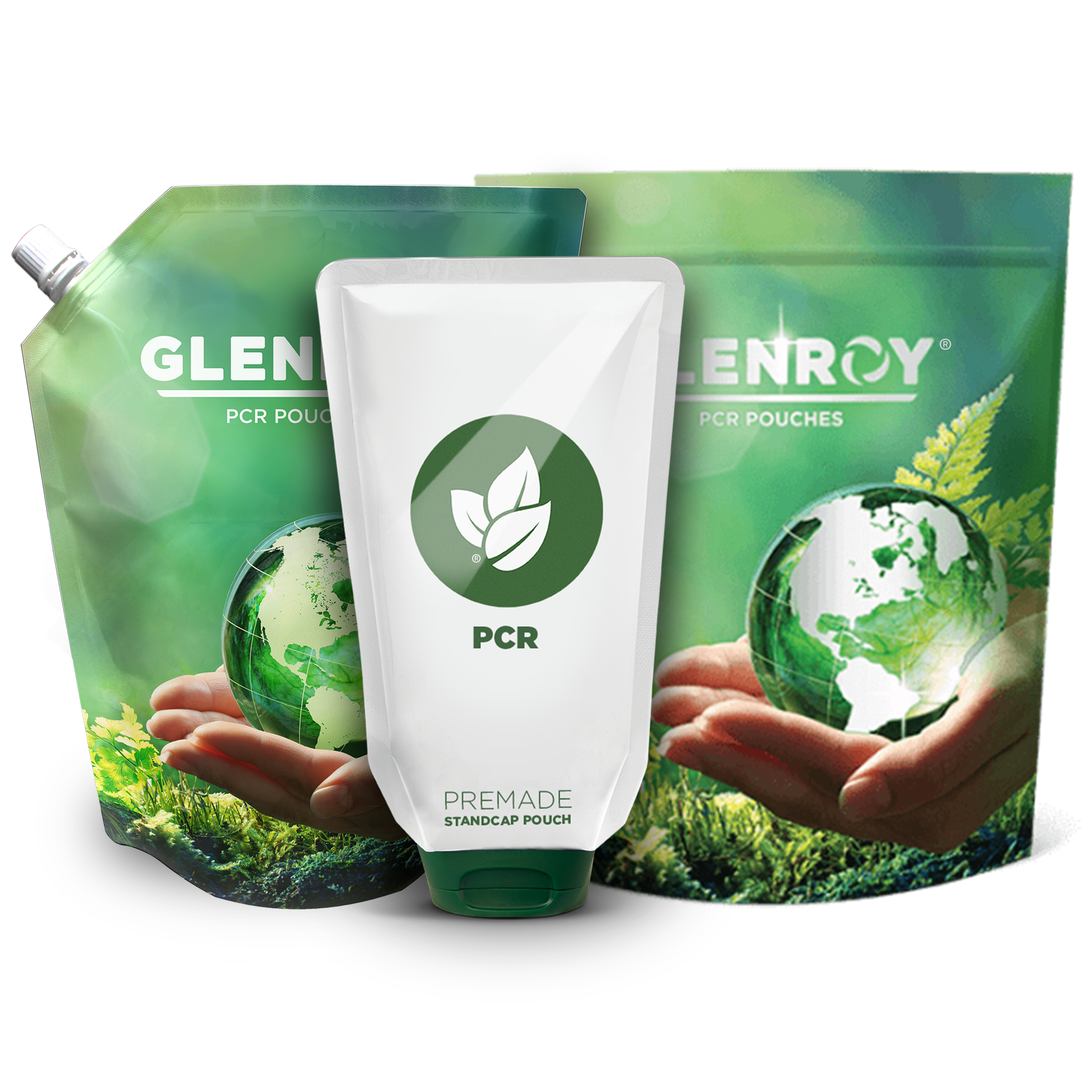
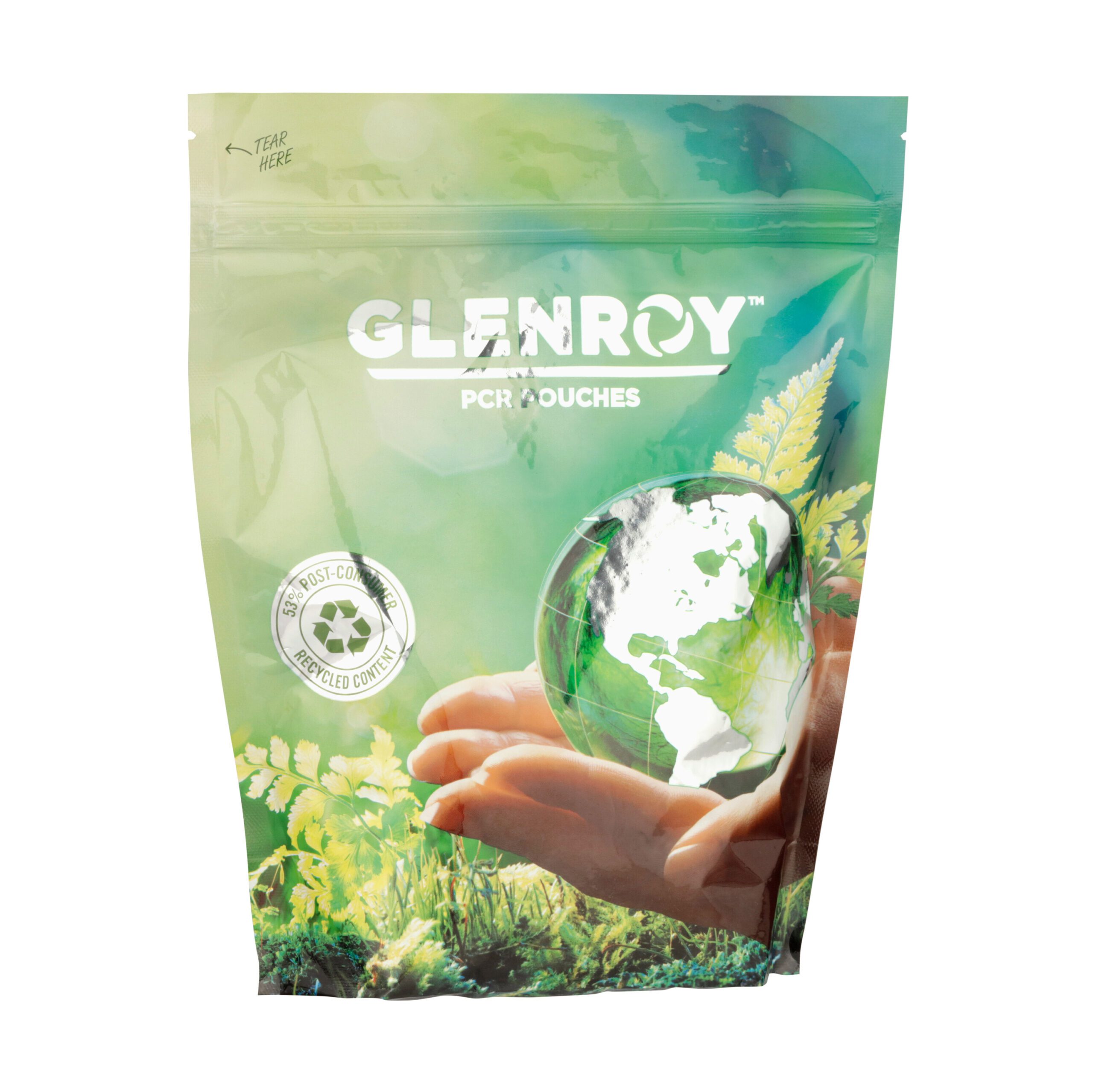
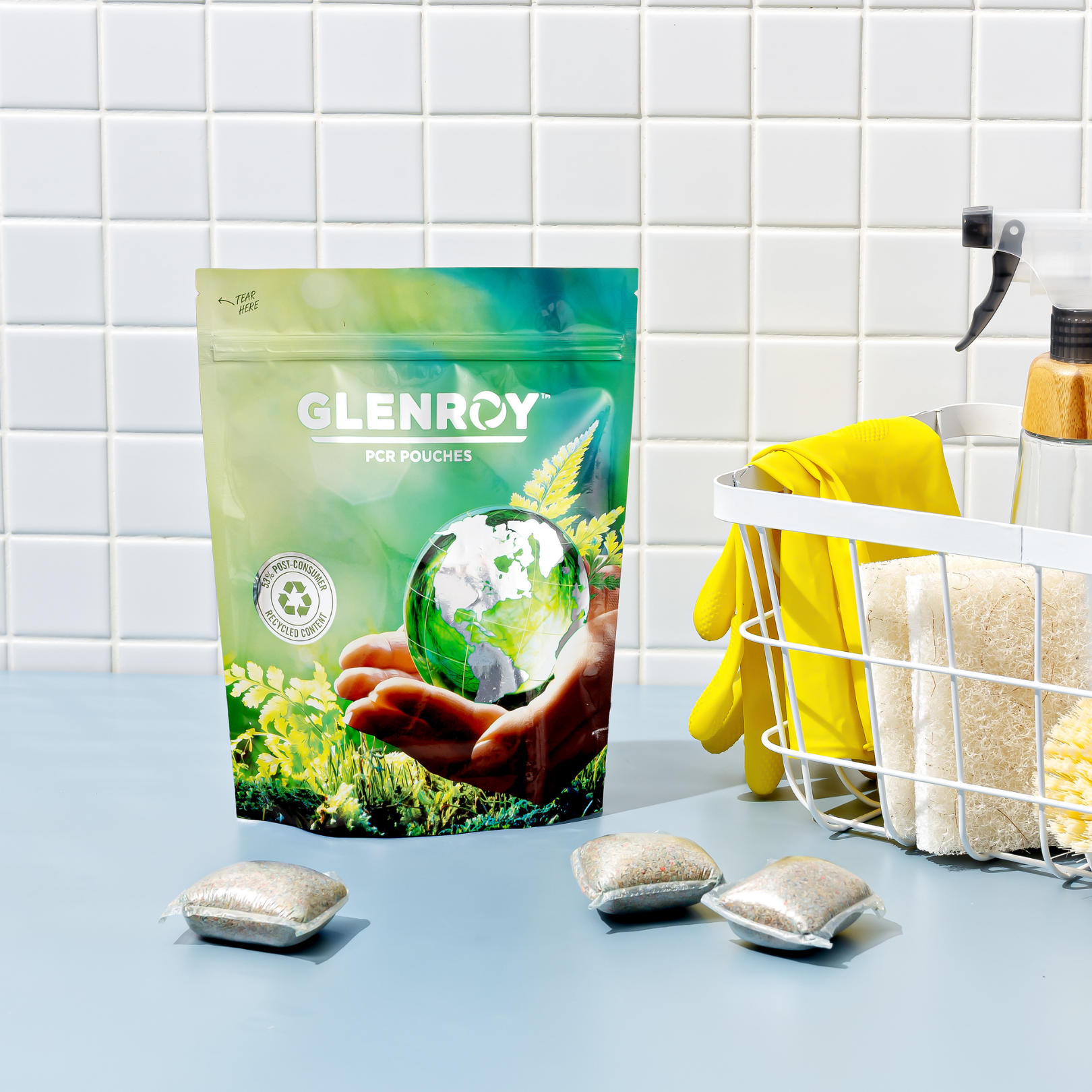
Stand-Up Zippered PCR Pouches
Made with up to 54% post-consumer recycled resin, these press-to-close zippered pouches are a high-performing, eco-forward choice for dry goods and household products. The multilayer film structure is engineered to maintain the mechanical properties required for reliable sealing, drop resistance, and shelf-life protection.
Structure highlights:
- 90% PCR barrier layer / 42% PCR sealant layer
- Good barrier to moisture and oxygen
- FDA-compliant and safe for direct food contact
- PCR plastic sourced from milk, juice, and water bottles
- Ideal for food packaging, personal care, and home care
Eco Impact vs. Rigid HDPE Canisters (per PTIS LCA study):
- Up to 81% less plastic (by weight)
- Up to 87% less fossil fuel consumption
- Up to 85% fewer greenhouse gas emissions
- Up to 72% less water usage
- Up to 78% less landfill waste
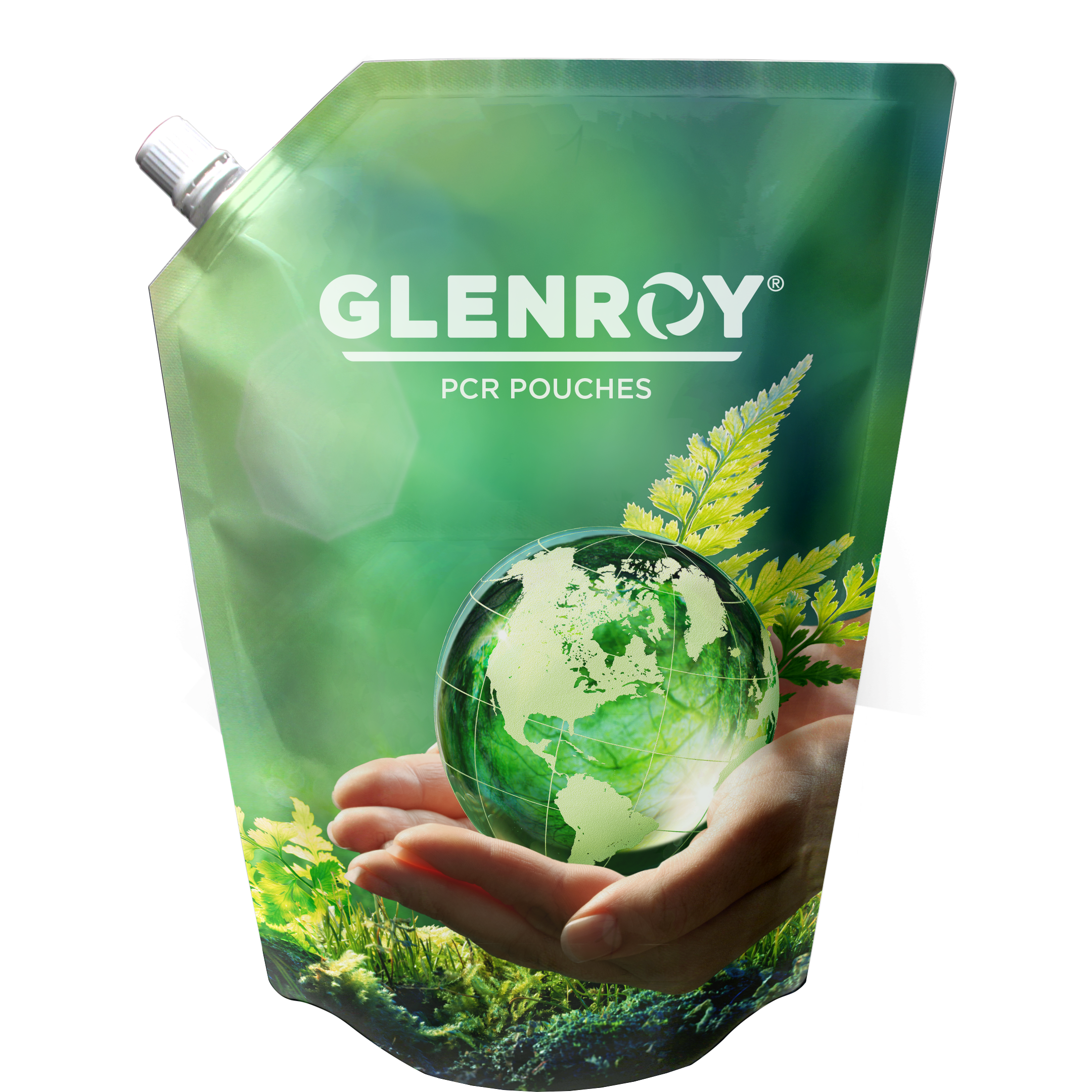
Spouted PCR Pouches
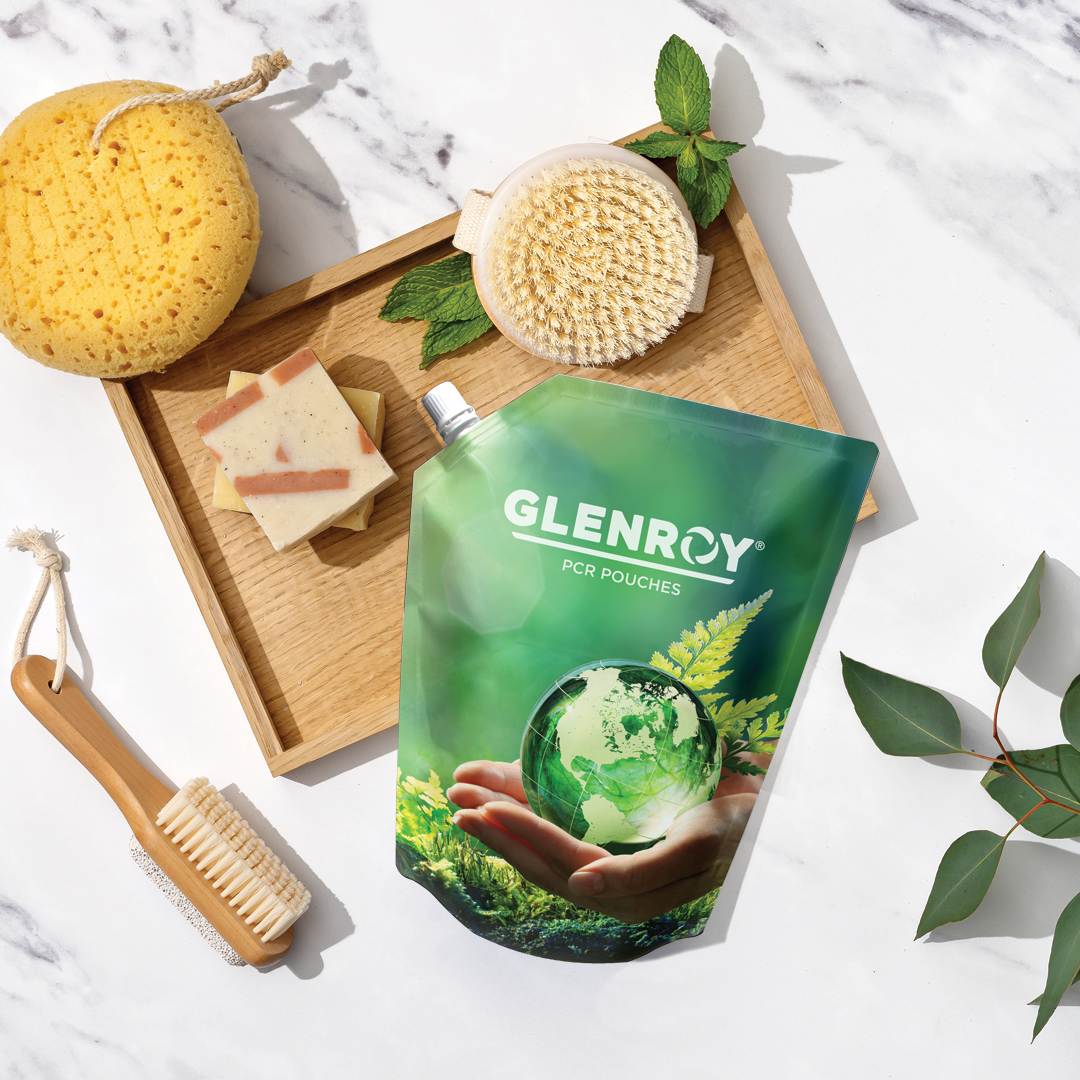
Built for liquid and semi-liquid products, our spouted pouches incorporate up to 37% post-consumer resin from bottle-recycling streams, including beverage bottles and other plastic containers. They replace single-use rigid plastic bottles with a dramatically lighter, more sustainable alternative.
Product highlights:
- Metalized and non-metalized options
- Up to 99% product evacuation
- Easy dispensing for personal care and household products
Eco Impact vs. Rigid PET Bottles (per PTIS LCA study):
- Up to 78% less plastic (by weight)
- Up to 87% less fossil fuel consumption
- Up to 88% fewer greenhouse gas emissions
- Up to 85% less water usage
- Up to 72% less landfill waste
STANDCAP Inverted Pouches with PCR Content
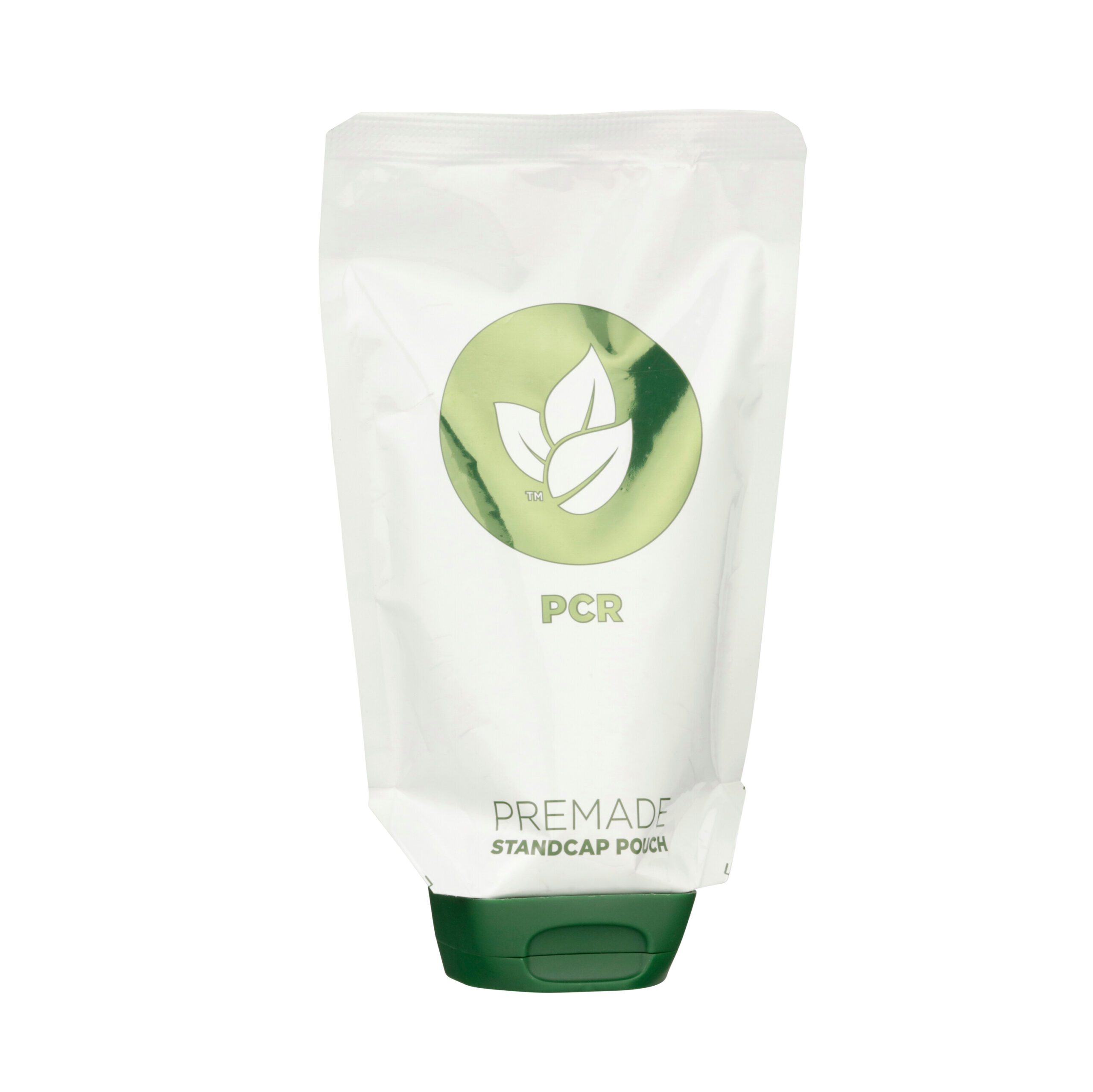
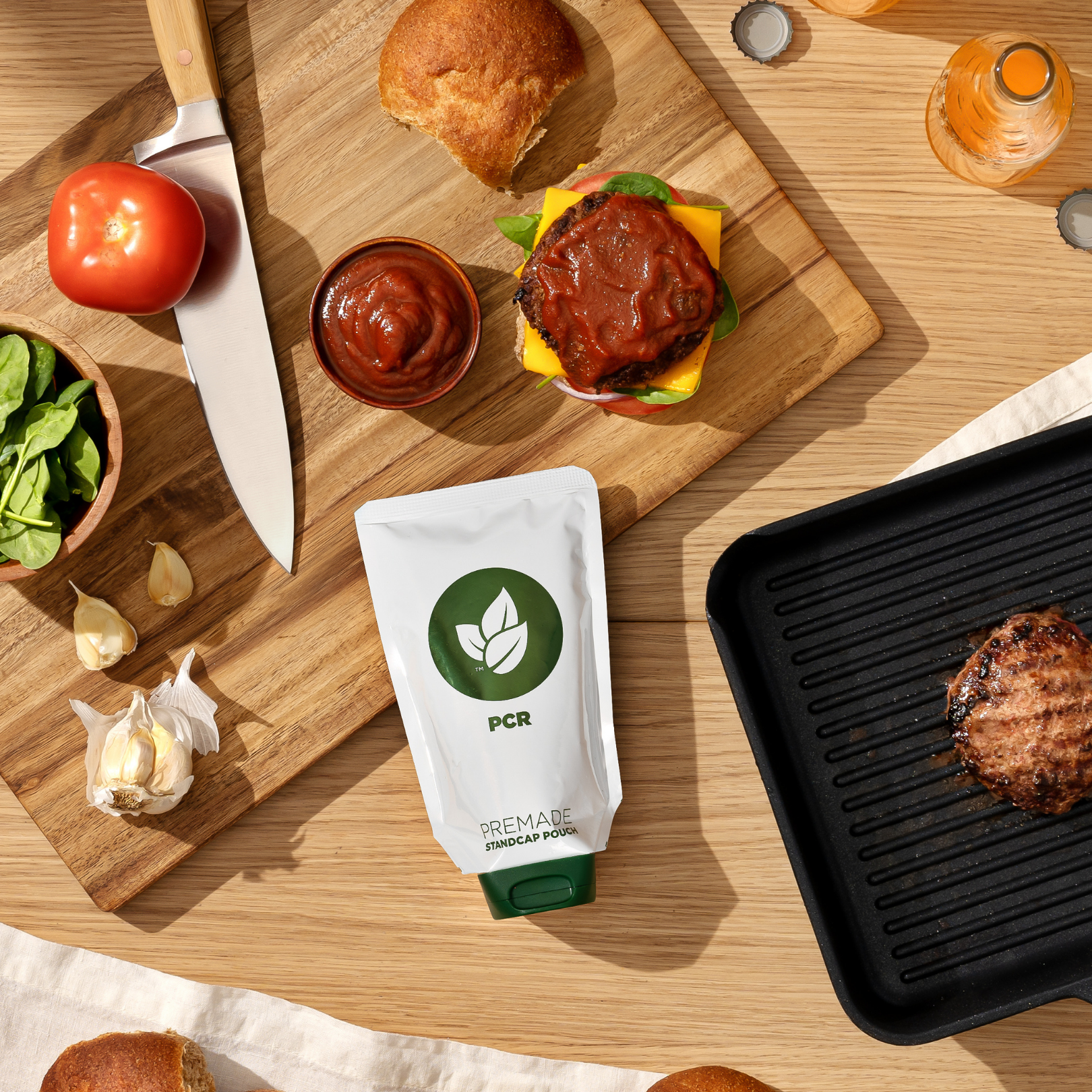
Our premade STANDCAP pouches combine innovative dispensing technology with up to 44% post-consumer resin, making them an ideal replacement for rigid plastic and glass jars across food, personal care, and household products.
Product highlights:
- PCR resin sourced from milk, juice, and water jugs
- FDA-compliant for direct food contact
- SimpliSqueeze® valve for controlled dispensing and clean product cutoff
- Up to 99% product evacuation
Eco Impact vs. Rigid Plastic and Glass Jars (per PTIS LCA study):
- Up to 61% less plastic (by weight)
- Up to 65% less fossil fuel consumption
- Up to 76% fewer greenhouse gas emissions
- Up to 78% less water usage
- Up to 87% less landfill waste
Why Post-Consumer Recycled Packaging Matters
When plastic products get collected through local recycling programs and run through the mechanical recycling process, they re-enter the manufacturing process as PCR resin rather than ending up in municipal solid waste. That recycling stream reduces demand for virgin raw material, lowers energy consumption, and creates a real market for post-consumer plastic.
Flexible PCR packaging amplifies that impact. Compared to rigid plastic packaging, flexible pouches require less plastic material to produce, consume less fossil fuel in transportation, and deliver a lower carbon footprint across the supply chain. For brands navigating evolving safety standards or growing consumer pressure to reduce their environmental impact, TruRenu® pouches make it possible without sacrificing performance.
Frequently Asked Questions
What is post-consumer recycled (PCR) packaging?
Post-consumer recycled packaging is made using plastic material that has already been used by consumers and collected through local recycling programs. That material runs through the mechanical recycling process to become PCR resin, which is then reintroduced into the manufacturing process as recycled material. Using post-consumer plastic reduces demand for virgin raw material, lowers energy consumption, and diverts plastic waste from municipal solid waste streams.
How is PCR packaging different from recyclable or compostable packaging?
These are three distinct approaches to sustainable packaging. Recyclable packaging is designed to be recycled after use. Compostable packaging is engineered to break down under specific conditions. PCR packaging is made from material that has already been recycled. Each serves a different role: recyclable and compostable packaging focus on end-of-life outcomes, while PCR packaging addresses the recycled content built into the plastic material from the start. Glenroy offers both PCR pouches and recyclable packaging options within the TruRenu® portfolio.
Are PCR pouches safe for direct food contact?
Yes. Glenroy’s TruRenu® stand-up zippered PCR pouches and STANDCAP inverted pouches are FDA-compliant and certified safe for direct food contact. The PCR resin used in these structures undergoes rigorous testing to meet applicable safety standards before it is incorporated into food-grade packaging.
How much post-consumer recycled content do Glenroy's PCR pouches contain?
PCR content varies by format. Stand-up zippered pouches contain up to 54% post-consumer resin, STANDCAP pouches contain up to 44%, and spouted pouches contain up to 37%. These levels are achieved through multilayer film structures that balance recycled material content with the barrier performance and product protection your packaging requires.